Effective At-Home Dog Dental Care: Techniques and Products to Prevent Canine
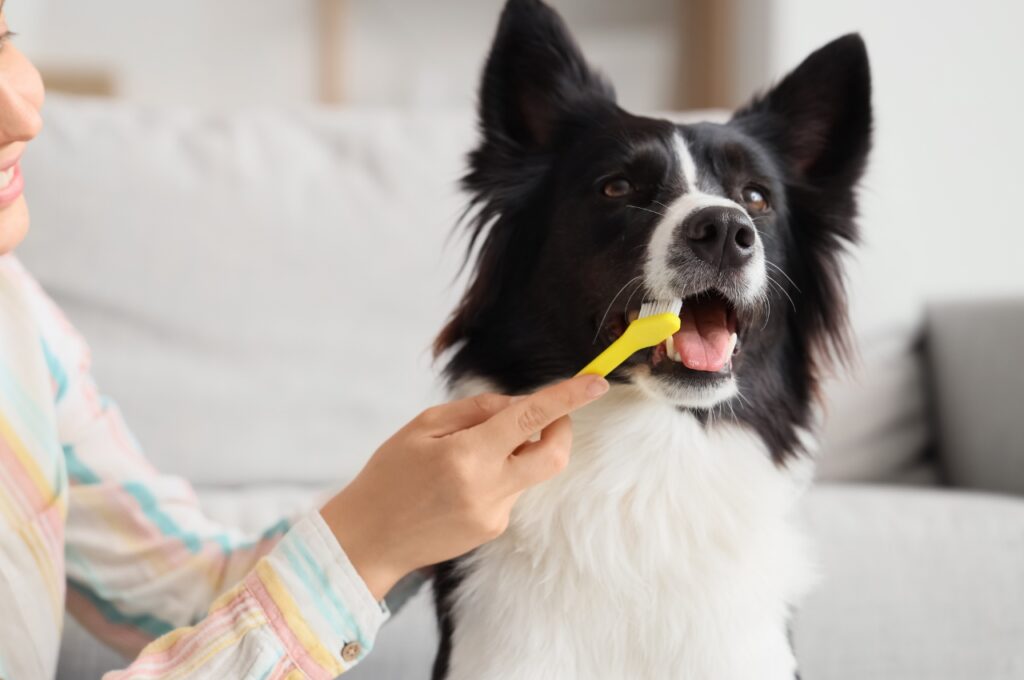
Most dog owners know they should be brushing their dog’s teeth. Yet, many owners find it difficult to maintain a consistent routine.
That gap between knowing and doing is understandable. Dental care does not feel urgent until there is a problem—and by the time there is a visible problem, there is usually already significant disease underneath it. Periodontal disease, the most common dental condition in dogs, affects the structures below the gum line long before it shows up as bad breath or visible tartar. By some estimates, the majority of dogs over the age of three have some degree of periodontal disease.
The good news is that dental disease is largely preventable with consistent at-home care. You do not need a complex routine or expensive products; you need the right technique, the right tools, and realistic expectations about how long it takes to build the habit.
This guide covers all the essentials: how to brush your dog’s teeth properly, what products are genuinely worth using, how to spot early warning signs, and how professional care fits into a complete dental health approach for your dog in Brisbane.
Why Does Dog Dental Health Matter Beyond Just the Mouth?
It is easy to think of dental care as a cosmetic concern—about fresh breath and clean-looking teeth. In reality, oral health has direct and significant implications for your dog’s whole-body wellbeing.
What Happens When Dental Disease Is Left Untreated?
Bacteria that accumulate in the mouth do not stay there. Periodontal disease allows bacteria to enter the bloodstream, where they can affect the heart, kidneys, and liver over time. Dogs with untreated dental disease often show subtle signs of discomfort—reluctance to eat hard food, dropping food whilst chewing, or a general reluctance to have their face touched—that owners frequently attribute to ageing or other causes.
In Queensland’s warm climate, dogs that pant heavily during summer are also producing more saliva and working their mouths harder. Whilst this does not cause dental disease, it does mean a healthy oral environment is particularly important for managing the bacterial load that builds up throughout the day.
How Common Is Dental Disease in Dogs?
It is very common. Periodontal disease is consistently cited by veterinarians as one of the most frequently diagnosed conditions in domestic dogs. The majority of dogs will develop some degree of dental disease by middle age—not because it is inevitable, but because at-home dental care is genuinely underperformed in most households.
The practical takeaway is that dental care is not something to consider only if your dog seems to have a problem. It is standard preventative care that should sit alongside vaccination, parasite prevention, and regular vet check-ups.
How Do You Brush Your Dog's Teeth Properly?
Brushing is the single most effective at-home intervention for dental disease prevention. It disrupts the plaque biofilm before it mineralises into tartar, which can only be removed by a vet under anaesthetic. Brushing two to three times a week provides meaningful protection; daily brushing is the gold standard.
What Equipment Do You Need to Get Started?
Toothbrush: Use a toothbrush designed specifically for dogs. Options include finger brushes (a silicone sleeve that fits over your fingertip), angled dog toothbrushes, and double-headed brushes that clean both sides of a tooth simultaneously. The right choice depends largely on your dog’s size and how comfortable they are with the process. For dogs new to brushing, a finger brush often feels less confronting.
Toothpaste: This is non-negotiable—always use a toothpaste formulated for dogs. Human toothpaste contains fluoride and xylitol (an artificial sweetener), both of which are highly toxic to dogs. Dog toothpastes are designed to be safe when swallowed and come in flavours like chicken, beef, and peanut butter that make the whole process more agreeable for your dog.
RSPCA Australia. (2017). Spring cleaning? 6 pet dangers to throw out and avoid.
What Is the Right Technique for Brushing?
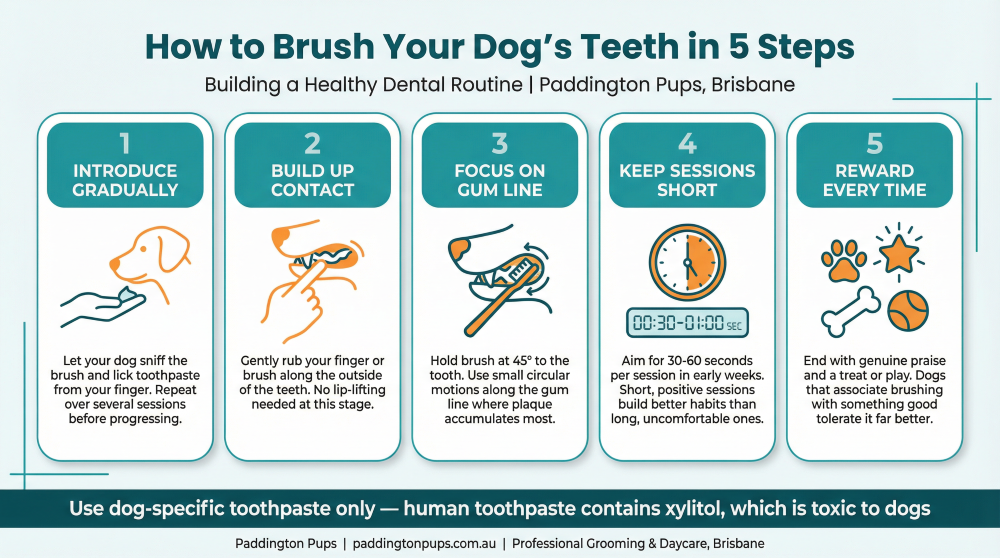
The technique matters as much as the frequency. Follow this sequence to build a positive routine:
Step 1 — Introduce gradually. Do not start by putting a toothbrush in your dog’s mouth. Let them sniff the brush and lick a small amount of toothpaste from your finger first. Repeat this over a few sessions before progressing.
Step 2 — Build up contact. Once your dog is comfortable with the toothpaste, gently rub your finger or the brush along the outside of the teeth without any upward lip-lifting. This gets them used to the sensation before you attempt a full brush.
Step 3 — Focus on the gum line. Hold the brush at approximately 45 degrees to the tooth and use small, circular motions along the gum line—this is where plaque accumulates and where brushing has the most impact. You do not need to brush the inside surfaces; a dog’s tongue keeps the inner surfaces relatively clean.
Step 4 — Keep sessions short. Particularly in the early weeks, aim for 30–60 seconds per session. A short, positive session every day builds a far better habit than a long, uncomfortable one twice a week.
Step 5 — Reward every time. End each session with genuine praise and a treat or play. Dogs that associate tooth brushing with something good tolerate it significantly better—and some come to enjoy it entirely.
What Are the Early Warning Signs of Dental Disease?
Catching dental problems early gives you the best chance of intervention before they become serious. Many of the most telling signs are easy to check during a regular cuddle or handling session.
What Should You Look and Smell for at Home?
Bad breath: The most common early indicator. Some mouth odour in dogs is normal, but breath that is noticeably unpleasant—particularly if it smells foul rather than just ‘doggy’—is a reliable sign that the bacterial load in the mouth has increased.
Visible tartar: Yellow or brown deposits at the gum line, particularly on the upper back molars and canine teeth, indicate tartar buildup. Tartar itself does not cause gum disease, but the bacteria living in it do.
Red or swollen gums: Healthy gums are pink and firm. Gums that look red, puffy, or that bleed when lightly pressed are showing signs of gingivitis—the earliest and most reversible stage of periodontal disease.
Reluctance to chew: If your dog is dropping food whilst eating, showing interest in food then backing away, or favouring one side of their mouth, they may be experiencing pain or discomfort.
Excessive drooling or pawing at the mouth: Less common but worth noting. These behaviours can indicate significant mouth discomfort.
If you are seeing any of these signs consistently, schedule a veterinary dental check-up rather than waiting for your next routine appointment. Early-stage dental disease responds well to professional cleaning and an improved at-home routine; advanced disease requires more significant intervention.
Which Dental Products Are Worth Using at Home?
Beyond brushing, a range of supplementary products can support your dog’s oral health—particularly on days when brushing is not practical. The key word is supplementary: these products work best alongside brushing, not as a replacement for it.
| Product Type | What It Does | How to Use It |
|---|---|---|
| Enzymatic toothpaste | Breaks down plaque chemically using natural enzymes, in addition to the mechanical action of the brush. | Use with every brushing session. |
| Dental chews | Provides mechanical cleaning through chewing action; reduces plaque and freshens breath. | Offer several times weekly as a treat. |
| Water additives | Added to drinking water to reduce bacterial levels in the mouth. | Use daily—follow product instructions. |
| Dental toys | Encourages chewing behaviour that mechanically disrupts plaque. | Use for regular supervised play. |
What Should You Look for When Choosing Products?
Look for products that carry a recommendation from the Veterinary Oral Health Council (VOHC)—an independent body that reviews and endorses products with proven efficacy for plaque and tartar control. Not all dental chews or toothpastes meet this standard, and the VOHC seal provides a reliable shortcut when comparing options.
Avoid products containing xylitol, which is toxic to dogs and can cause a rapid, life-threatening drop in blood sugar. Furthermore, be cautious with very hard chews (antlers, hard nylon bones) that can fracture teeth. A useful rule of thumb: if you cannot make a dent in the chew with your thumbnail, it is probably too hard for your dog’s teeth.
When in doubt, ask your vet or your groomer which products they recommend for your dog’s specific breed, age, and current dental condition.
Veterinary Oral Health Council (VOHC ). Accepted Products for Dogs.
What Role Does Professional Care Play in Dental Health?
At-home care is essential, but it does not replace professional dental assessment. Your vet should check your dog’s teeth at every routine health visit—typically annually for adult dogs in good health. Professional dental cleans under anaesthetic, where indicated, allow the vet to scale tartar from below the gum line and assess each tooth individually in a way that is simply not possible during a regular check-up.
How Does Grooming Connect to Dental Care?
Professional grooming appointments offer a practical opportunity to keep dental care on your radar. At Paddington Pups, our groomers have hands-on experience with thousands of dogs and regularly notice early changes in coat, skin, nails, and general condition that owners sometimes miss between vet visits. If a groomer notices your dog is showing signs of mouth discomfort or unusual drooling, it is worth following up with your vet—they can be a useful early-alert layer in your overall care approach.
Some grooming services also offer teeth brushing as an add-on. Whilst this is not a substitute for daily at-home brushing, having a grooming team reinforce the process can be helpful for keeping consistency up for owners who are still building the habit.
Putting It All Together: A Realistic Dental Care Routine
Dental care does not have to be complicated or time-consuming. A sustainable routine for most Brisbane dog owners looks something like this:
- Daily (ideal): Brush teeth using a dog toothbrush and enzymatic toothpaste. Two to three minutes is sufficient once you and your dog have established the habit.
- Several times weekly: Offer a vet-recommended dental chew as a treat. Supervise to ensure appropriate chewing behaviour.
- Monthly: Do a quick visual check—look at gum colour, check for visible tartar, smell the breath, and note any changes in how your dog is eating or behaving.
- Annually: Professional dental check at your vet. More frequently if your dog has a history of dental disease, is a breed prone to dental problems (small and toy breeds are particularly susceptible), or if your vet recommends it.
Your Dog's Dental Health Starts at Home
Dental disease in dogs is common, but it is also largely preventable. The gap between good dental health and significant disease often comes down to whether an owner has built a simple, consistent routine—and whether they have caught early signs before they have progressed.
If you are looking to build that routine, start with the basics: the right brush, the right toothpaste, a short positive session every day, and a vet appointment on the calendar. Everything else is supplementary.
For Brisbane dog owners who would like professional support as part of their dog’s overall care routine, Paddington Pups offers professional grooming services in Paddington that complement what you are doing at home.
Explore our grooming services or get in touch to find out more.
FAQs About Dog Dental Care
Can I use human toothpaste to brush my dog's teeth?
No, you should never use human toothpaste. Human toothpaste often contains fluoride and xylitol (an artificial sweetener), both of which are highly toxic to dogs. Always use a toothpaste specifically formulated for dogs, which is safe for them to swallow.
How often should I brush my dog's teeth?
Daily brushing is the gold standard for preventing dental disease. However, brushing two to three times a week still provides meaningful protection against plaque and tartar buildup.
Does Paddington Pups offer teeth cleaning services?
While we do not perform veterinary dental scaling, Paddington Pups offers teeth brushing as an add-on to our professional grooming services. This helps reinforce your at-home routine and keeps your dog’s mouth fresh between vet visits.
What are the first signs of dental disease in dogs
The most common early indicator is noticeably bad breath. Other early signs include red or swollen gums (gingivitis), visible yellow or brown tartar buildup, dropping food whilst chewing, or a reluctance to have their face touched.