Why Are Separation Anxiety and Boarding Such a Difficult Combination?
- A new environment with unfamiliar smells and sounds
- Unfamiliar people handling and caring for them
- Unfamiliar dogs in the same space
- The absence of the owner, the one person who makes the dog feel safe
- No established routine or predictable structure in the new space
How Do You Recognise Whether Your Dog Has Separation Anxiety?
What Does Separation Anxiety Look Like?
- Pacing or following you from room to room
- Whining or vocalising as you prepare to go
- Becoming unusually clingy when you pick up your keys or bag
- Trembling or excessive panting before departure
- Persistent barking, howling, or whining
- Destructive behaviour focused around doors and windows
- Attempts to escape the home or yard
- Excessive salivation or drooling
- Seeking constant physical contact
- Inability to settle unless touching or next to you
- Becoming visibly distressed when you move to another room
What Is the Most Important Preparation Step for Anxious Dogs?
How Does Daycare Build Familiarity Before Boarding?
What Are the Step-by-Step Preparations for Boarding an Anxious Dog?
Step | Action Required | Why It Matters |
1. Start Early | Begin preparation 3 to 4 weeks before the stay. | Last-minute preparation does not give enough time to build familiarity. |
2. Visit in Advance | Arrange a familiarisation visit or assessment day. | Allows the dog to explore the environment and build positive associations. |
3. Maintain Routine | Keep walks, meals, and sleep times consistent. | Anxious dogs regulate themselves through predictability. |
4. Pack Familiar Items | Bring unwashed bedding, a worn t-shirt, and regular food. | Familiar smells provide immediate comfort in a new space. |
5. Calm Drop-Off | Keep the goodbye brief and matter-of-fact. | Long, emotional farewells escalate the dog’s anxiety at separation. |
6. Maintain Diet | Provide the dog’s regular food in correct portions. | Prevents digestive upset from adding to the stress of a new environment. |
7. Communicate | Tell staff about triggers and settling preferences. | Allows the facility team to provide appropriate support from arrival. |
What Actually Helps Anxious Dogs During Boarding?
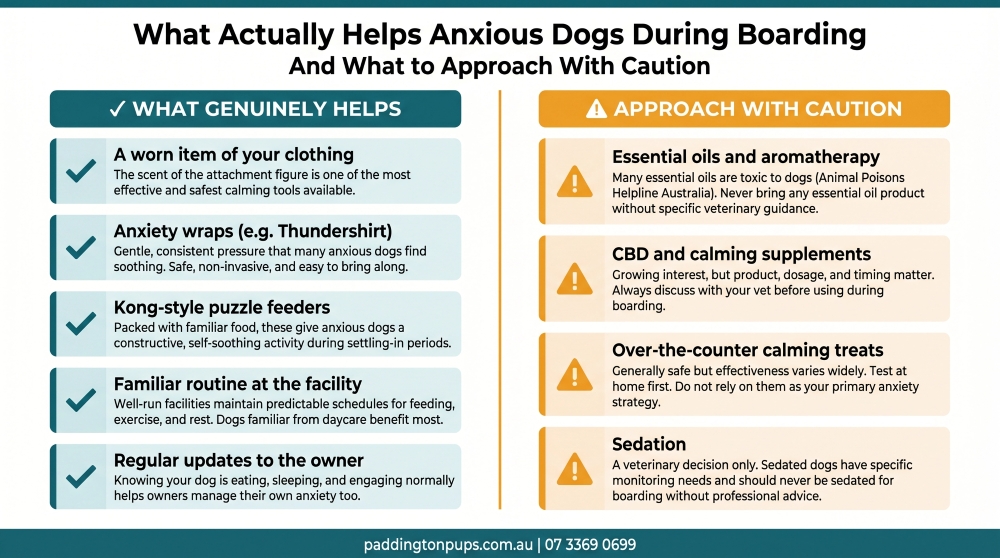
- A worn item of your clothing placed in the sleeping area. The scent of the attachment figure is one of the most effective and safest calming tools available.
- Anxiety wraps such as Thundershirts. These apply gentle, consistent pressure that many anxious dogs find soothing. They are safe, non-invasive, and easy to bring along.
- Kong-style puzzle feeders packed with familiar food. These give anxious dogs a constructive, self-soothing activity during settling-in periods.
- Familiar routine at the facility. Well-run boarding facilities maintain predictable schedules for feeding, exercise, and rest. Dogs already familiar with the facility from daycare benefit from the same rhythm they already know.
- Regular updates to the owner. Knowing your dog is eating, sleeping, and engaging normally helps owners manage their own anxiety, which indirectly supports the dog.
- Essential oils and aromatherapy products. As advised by the Animal Poisons Helpline Australia, many essential oils are toxic to dogs . Do not bring any essential oil product to a boarding facility without specific veterinary guidance on what is safe for canine use.
- CBD and calming supplements. There is growing interest in CBD for canine anxiety, but the right product, dosage, and timing matter. Discuss any supplement with your vet before using it during boarding.
- Over-the-counter calming treats. While generally safe, their effectiveness varies wildly. Do not rely on them as your primary anxiety management strategy without testing them at home first.
- Sedation. This is a veterinary decision only. Sedated dogs have specific monitoring needs and should never be sedated for boarding without professional advice.
How Does Grooming Support the Boarding Transition?
When Should You Involve Your Vet?
- Your dog injures itself trying to escape when left alone
- Your dog stops eating or drinking entirely when separated from you
- Your dog has shown significant distress during a previous boarding or kennelling experience
- Your dog’s anxiety symptoms are severe enough to cause self-harm, such as excessive licking leading to sores
- Your dog has not responded to standard preparation steps in the past
Booking Your Dog’s Boarding Stay
FAQs
Will my anxious dog be left alone at night during boarding?
At Paddington Pups, dogs are settled into their own comfortable sleeping areas for the night to ensure they get proper rest. Because they have spent the day active and socialising in daycare, most dogs, even anxious ones, settle well and sleep soundly.
Can I bring my dog's own bed and toys?
Yes, absolutely. We actively encourage bringing your dog’s unwashed bedding and a familiar toy or worn t-shirt. The scent of home is a powerful comfort tool for anxious dogs in a new environment.
What if my dog refuses to eat while boarding?
It is common for anxious dogs to skip a meal or two when they first arrive. Our team monitors eating closely. We recommend bringing your dog’s regular food to avoid digestive upset, and we can add safe, enticing toppers (like a little warm water or plain chicken) if needed to encourage them.
Is it better to sneak out at drop-off so my dog doesn't get upset?
No. Sneaking away can actually increase anxiety because the dog suddenly realises you are gone without warning. A brief, calm, matter-of-fact goodbye is the best approach. It signals to the dog that everything is normal and there is no reason to panic.
How many daycare visits should my dog have before boarding?
For a dog with separation anxiety, we recommend a minimum of three to four daycare visits spread over the weeks leading up to the boarding stay. This gives them time to learn that they will be picked up at the end of the day, building trust in the routine.