
Why Your Dog's Coat Looks Terrible (And How Brisbane Groomers Fix It)
As a dedicated Brisbane dog owner, you do everything right. You brush your dog, use high-quality shampoos, and never miss a grooming appointment. Yet, you’re still dealing with a dull coat, persistent mats, and an itchy, uncomfortable pup. It’s a frustrating cycle, and it leaves you wondering: what am I doing wrong?
The truth is, many common grooming issues in Brisbane aren’t due to neglect. They’re often the result of a mismatched approach for your dog’s specific needs, the challenges of Queensland’s climate, or underlying skin conditions that haven’t been diagnosed. The grooming routine that works wonders for a Labrador might be all wrong for a Maltese, and the popular products on the market could be irritating your dog’s sensitive skin.
At Paddington Pups, our professional groomers see this all the time. Well-meaning owners are working hard but not seeing results because they’re treating the symptoms, not the root cause. This guide will help you understand the real reasons behind Brisbane’s most common grooming problems and how to fix them for good.
What's Really Causing Your Dog's Skin Irritation?
Constant scratching, red patches, and general misery—persistent skin problems are a major source of frustration for Brisbane dog owners. Identifying the true cause is the first step to providing your dog with lasting relief.
Brisbane’s subtropical climate creates a unique set of challenges for our furry friends. Unlike dogs in cooler, drier climates, Queensland pups face year-round exposure to environmental factors that can wreak havoc on their skin and coat.
What Skin Problems Are Most Common in Queensland Dogs?
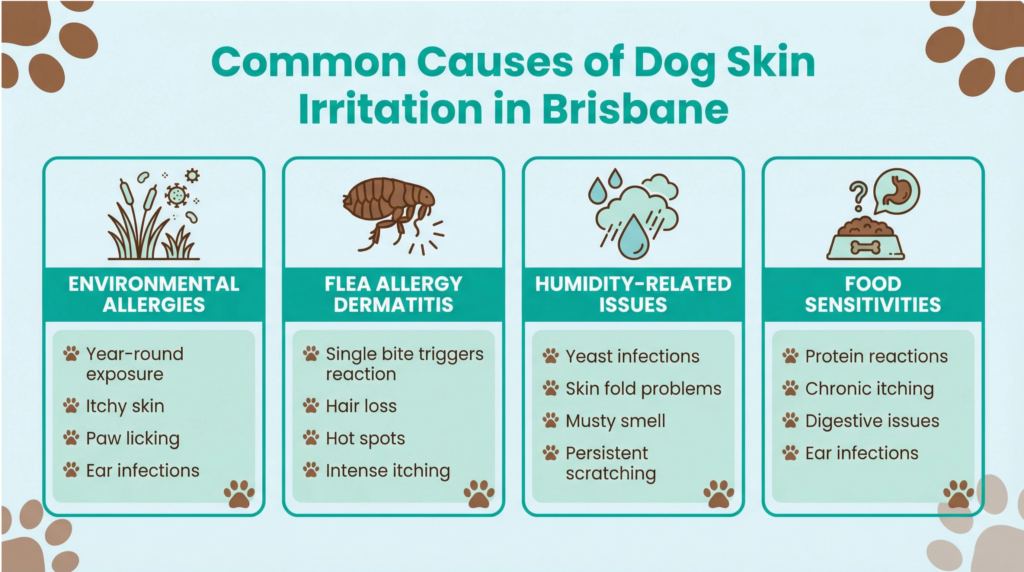
Environmental allergies are particularly problematic in our region. With year-round warm weather, dogs are constantly exposed to pollen, grass, and other environmental allergens that trigger reactions. These allergies manifest as itchy skin, red patches, excessive paw licking, and recurring ear infections. Many Brisbane dog owners notice their pets are more uncomfortable during certain seasons, but the reality is that allergens are present throughout the year in Queensland.
Flea allergy dermatitis is another significant concern. Our climate provides ideal breeding conditions for fleas twelve months a year. Even dogs on regular flea prevention can experience reactions. For sensitive dogs, a single flea bite can trigger a severe allergic reaction, resulting in intense itching, hair loss, and painful hot spots.
Humidity-related issues are unique to our subtropical environment. Queensland’s high humidity creates perfect conditions for yeast and bacterial infections, particularly in skin folds. Breeds like Bulldogs, Pugs, and Shar-Peis are especially vulnerable. Look for a musty smell, redness in skin folds, and persistent scratching even after bathing.
Food sensitivities can also manifest as skin problems. Some dogs react to specific proteins or ingredients in their diet, causing chronic itching, ear infections, and digestive issues alongside skin irritation.
How Do You Identify What's Causing Skin Irritation?
Understanding symptom patterns helps identify the underlying cause and determine appropriate treatment:
| Symptom Pattern | Likely Cause | What You Should Do |
|---|---|---|
| Seasonal itching (worse certain months) | Environmental allergies | Vet consultation, possible allergy testing |
| Year-round scratching | Food sensitivity or flea allergy | Elimination diet trial, strict flea control |
| Musty smell, red skin folds | Yeast or bacterial infection | Veterinary treatment, medicated shampoo |
| Intense scratching after single flea | Flea allergy dermatitis | Aggressive flea prevention, vet care |
| Paw licking, face rubbing | Contact allergy or environmental allergy | Identify triggers, vet consultation |
| Hot spots (inflamed patches) | Moisture trapped under coat, allergies | Immediate vet visit, keep area dry |
Our professional groomers at Paddington Pups are skilled at spotting the early signs of skin issues during grooming appointments, often before owners are even aware of a problem. They can identify hidden hot spots, early-stage yeast infections, and flea evidence that might otherwise go unnoticed. Early detection can prevent minor irritations from becoming serious health concerns.
What Home Remedies Can Provide Temporary Relief?
For mild irritation whilst waiting for a veterinary consultation, certain home remedies can provide temporary relief:
Oatmeal Baths: Using colloidal oatmeal can soothe irritated skin and reduce itching. Research has shown that oatmeal bath treatments are effective for dogs with dry, irritated skin, with studies evaluating their benefit for xerotic (dry skin) symptoms compared to other oatmeal preparations. Use lukewarm water (important in Brisbane’s heat) and let your dog soak for 10-15 minutes before rinsing thoroughly.
Coconut Oil: Small amounts of coconut oil applied to dry patches can moisturise skin, but use sparingly to avoid clogging pores.
Pure Aloe Vera: Aloe vera gel without alcohol or additives provides cooling relief for minor inflammation and hot spots.
However, home remedies only address symptoms, not causes. If irritation persists beyond three to five days, spreads, or worsens, consult your veterinarian immediately.
Why Does Your Dog Keep Getting Matted?
You just had your dog groomed, and already, new mats are forming. This frustrating problem is common in Brisbane, but it’s not inevitable. Understanding why mats form is the key to preventing them.
Mats don’t appear randomly—they form for specific, preventable reasons. Recognising these causes helps you stop them before they start.
What Causes Mats to Form in Brisbane Dogs?
Friction Points are the primary culprits. Mats form where fur rubs against itself or surfaces, usually around the collar area, behind the ears, under the front legs, the rear end and tail, and the chest area. These friction points require extra attention during brushing.
Brisbane’s Humidity accelerates mat formation significantly. Queensland’s moisture-laden air causes fur to tangle more readily than in dry climates. Hair absorbs humidity, swells slightly, and tangles more easily. This means Brisbane dogs need more frequent brushing than the same breed would require in Melbourne or Perth.
Incorrect Brushing Technique is a mistake most Brisbane dog owners make without realising it. They brush the surface layer of fur but completely miss the undercoat where mats actually form. The key is brushing all the way down to the skin, working in small sections, and using the right tools for your dog’s coat type.
Improper Drying after water exposure is another major cause. Swimming, rain, or baths followed by air-drying causes mats to form. Wet fur tangles easily, and if it dries whilst tangled, mats set in firmly.
How Do You Prevent Mats at Home?
Prevention starts with using the right brush for your dog’s coat type and proper technique:
| Coat Type | Required Tools | Brushing Technique | Frequency in Brisbane |
|---|---|---|---|
| Long, silky (Maltese, Shih Tzu) | Slicker brush + metal comb | Brush in sections down to skin, follow with comb | 3-4 times per week |
| Double coat (German Shepherd, Husky) | Undercoat rake + slicker brush | Remove undercoat first, then top layer | 3-4 times per week (daily during shedding) |
| Curly (Poodle, Bichon) | Pin brush + metal comb | Work through curls gently, check for hidden mats | 4-5 times per week |
| Short, smooth (Beagle, Boxer) | Rubber curry brush | Circular motions to remove dead hair | 2-3 times per week |
Work in small sections, brushing all the way down to skin level—not just the surface. Focus extra time on friction points: the collar area, behind ears, armpits, and rear end.
During Brisbane’s wet season (November through April), increase brushing frequency. After any water exposure, never let your dog air-dry without brushing. Towel dry thoroughly, then brush completely whilst blow-drying (if your dog tolerates it) or immediately after air-drying.
When Should Professional Groomers Remove Mats?
For safe and effective mat removal, it’s always best to seek professional grooming. At Paddington Pups, our groomers use specialised dematting tools and techniques to remove mats without causing pain or injury to your dog. Professional grooming research has documented that experienced groomers routinely handle matted or heavy coats using controlled scissoring and dematting methods designed to be humane and minimise discomfort whilst maintaining skin safety. Severe mats close to skin require professional removal—attempting to cut them out yourself poses a serious injury risk.
Are You Using the Wrong Grooming Products?
Walk into any Brisbane pet store and you’ll face shelves packed with dozens of shampoos and grooming products—all claiming to be the best choice. Yet your dog’s coat still looks dull or triggers skin reactions. The issue isn’t the quality of these products; it’s whether they’re right for your specific dog.
The “best” grooming product isn’t universal—it’s the one that matches your dog’s coat type, skin sensitivity, and Queensland’s unique climate conditions.
What Product Mistakes Do Brisbane Owners Make?
Using Human Shampoo is one of the most common mistakes Brisbane owners make. Human products are formulated for human skin, which has a different pH level than dog skin. Using human shampoo disrupts your dog’s skin barrier, potentially causing dryness, irritation, and increased vulnerability to infections.
Choosing Based on Scent is another pitfall. That wonderful fragrance might smell amazing to you, but it could contain irritants. Dogs with sensitive skin often react badly to artificial fragrances, dyes, and harsh chemicals.
The One-Size-Fits-All Approach ignores the reality that different coat types have different needs. The shampoo that works brilliantly for a short-coated Labrador might be completely wrong for a long-coated Maltese.
Not Rinsing Thoroughly leaves shampoo residue in the coat, which causes dryness, itching, and dullness. Brisbane’s soft water can make thorough rinsing even more important. Always rinse longer than you think necessary.
What Should You Look for in Dog Grooming Products?
For dogs with sensitive skin, look for hypoallergenic formulas that are fragrance-free and dye-free. Oatmeal-based shampoos provide soothing, moisturising benefits. Products should be pH-balanced specifically for dogs (typically pH 6.5 to 7.5).
Different coat types require different formulations:
| Coat Type | Best Product Type | Why It Works | Brisbane Climate Consideration |
|---|---|---|---|
| Long, silky | Moisturising shampoo + conditioner | Prevents dryness, reduces tangles | Extra conditioning combats humidity |
| Double coat | Deshedding shampoo | Helps release undercoat, reduces shedding | Critical during year-round Queensland shedding |
| Curly | Moisturising, detangling formula | Maintains curl pattern, prevents mats | Humidity causes rapid tangling |
| Short, smooth | Gentle, basic shampoo | Cleans without stripping natural oils | Less frequent bathing needed |
| Oily coat (Basset Hound) | Degreasing shampoo | Controls oil without over-drying | Queensland humidity exacerbates oiliness |
How Often Should You Bathe Your Brisbane Dog?
Bathing frequency depends on your dog’s breed and lifestyle:
- Short-coated, indoor dogs: Every 6-8 weeks
- Long-coated breeds: Every 4-6 weeks (more frequent in Brisbane’s humid climate)
- Dogs prone to skin issues: As directed by your vet (often weekly with medicated shampoo)
- Dogs who swim frequently: Rinse with clean water after each swim, full bath monthly
- Active outdoor dogs: Every 4-6 weeks or when visibly dirty
Over-bathing strips natural oils and causes dry skin, whilst under-bathing allows dirt and allergens to accumulate. Professional groomers at Paddington Pups can recommend optimal bathing frequency for your specific dog.
When Should You Seek Professional Help?
Whilst home grooming plays an important role, some issues require expert intervention. Attempting to fix these problems at home can often make them worse.
Recognising when a grooming problem exceeds your capability prevents suffering for your dog and avoids problems that become more expensive and difficult to treat later.
What Problems Always Need Professional Groomers?
Severe Matting that covers large areas or sits close to skin requires professional removal. Attempting to cut out severe mats yourself poses a serious injury risk. Professional groomers have specialised tools and training to remove mats safely without injuring the skin underneath.
Persistent Skin Problems lasting more than a week indicate something serious. Spreading redness, foul odour, hair loss, or oozing sores all require veterinary diagnosis. These symptoms indicate infections, severe allergies, or parasites that won’t resolve without proper medical treatment.
Nail Issues including overgrown nails, bleeding quick (blood vessel in nail), or broken nails need professional care. These conditions are painful and risk infection if handled improperly.
Anal Gland Issues manifest as constant scooting, excessive licking of the rear area, or a fishy smell. These signs indicate impacted anal glands that need to be expressed by a professional groomer or veterinarian. Attempting this yourself without training often causes injury.
Ear Infections present as red, smelly, or painful ears. If your dog pulls away when you touch their ears, veterinary treatment is essential. Cleaning infected ears without proper medication won’t resolve the problem.
Why Does Regular Professional Grooming Prevent Problems?
Regular professional grooming provides proactive maintenance that prevents future problems:
- Thorough undercoat removal prevents future matting
- Complete drying prevents humidity-related skin issues
- Professional assessment catches problems early
- Proper technique maintains coat health long-term
- Expert advice helps owners maintain results between appointments
Research increasingly recognises professional grooming as an important health-related service for pets, supporting overall wellbeing and encouraging owners to access appropriate care. Studies highlight how grooming professionals function as a health resource, often identifying problems early and contributing to animal welfare.
Dogs on regular grooming schedules (every six to eight weeks for most breeds, four to six weeks for high-maintenance coats) have healthier skin, fewer mats, and better overall coat condition than dogs groomed only when “really needed.”
At Paddington Pups, our experienced groomers identify problems during routine appointments that owners haven’t noticed—hidden hot spots, early yeast infections, flea evidence, lumps requiring veterinary evaluation, and skin abnormalities. This early detection often means easier, less expensive treatment and prevents minor issues from becoming serious medical problems.
Conclusion
Struggling with your dog’s grooming? The team at Paddington Pups is here to help. With over 15 years of experience with Brisbane dogs, we understand the unique challenges of our climate and how Queensland’s humidity, heat, and year-round allergens affect your dog’s coat and skin health.
Our professional groomers combine proper equipment, expert techniques, and comprehensive assessment to identify root causes—not just treat symptoms. We work with hundreds of Brisbane dogs across every breed and coat type, and we’ve seen how the right approach transforms chronic grooming problems into manageable maintenance.
Ready to solve your dog’s grooming problems for good? Visit our Dog Grooming page to book an appointment with Paddington Pups’ professional team. Whether you’re dealing with persistent mats, skin irritation, or simply want to maintain your dog’s coat health between appointments, we provide expert care tailored to your dog’s specific needs and Brisbane’s challenging climate. Because healthy coats start with understanding what’s really going wrong—and knowing how to fix it properly.
Frequently Asked Questions
How often should I brush my dog in Brisbane’s climate?
- Brisbane’s humidity requires more frequent brushing than drier climates. Long-coated breeds need brushing three to four times per week, whilst short-coated breeds need it two to three times weekly. During the wet season (November-April), increase frequency to prevent mat formation.
Can I use baby shampoo on my dog?
- No, even gentle baby shampoo has a different pH level than dog skin requires. Always use shampoos specifically formulated for dogs to avoid disrupting their skin barrier and causing irritation.
What’s the best way to dry my dog after a bath?
- Towel dry thoroughly, then brush completely whilst blow-drying on a cool setting if your dog tolerates it. Never let your dog air-dry without brushing, as this leads to mat formation, especially in Brisbane’s humid climate.
How do I know if my dog’s skin problem needs a vet?
- If irritation persists beyond five days, spreads, worsens, or is accompanied by foul odour, hair loss, or oozing, consult your veterinarian immediately. These signs indicate infections or conditions requiring medical treatment.
Why does my dog mat so quickly after grooming?
- Rapid mat formation usually indicates incorrect at-home brushing technique (only brushing the surface), Brisbane’s humidity, or not brushing after water exposure. Focus on brushing down to the skin and increase frequency during humid months.