Why Is Routine Crucial for House Training Puppies?
How Do You Set Up Your Home for House Training Success?
Use a Crate or Playpen
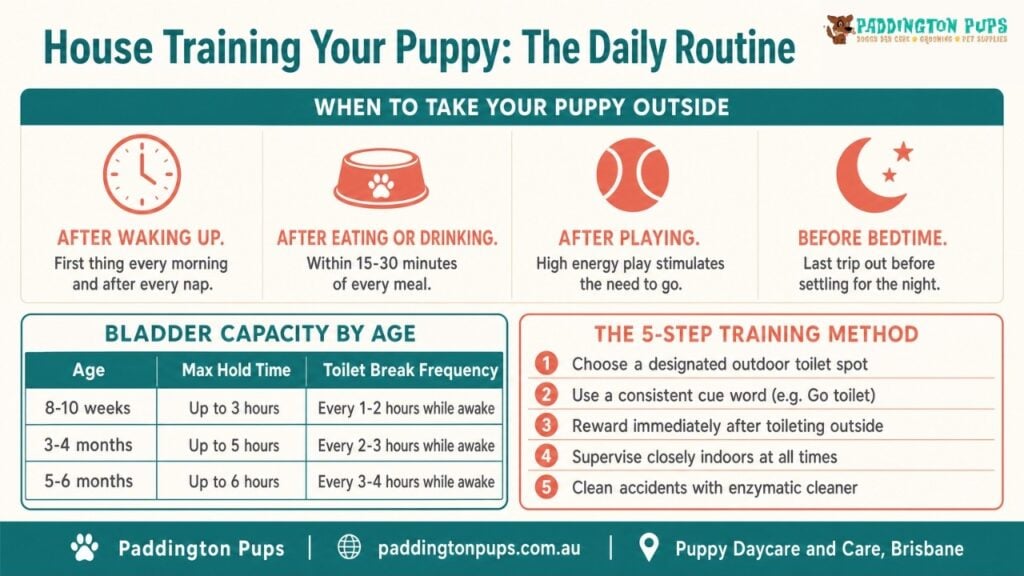
Management is critical in the early stages. When you cannot actively supervise your puppy, they should be in a puppy-proofed area, such as a playpen or a crate. Dogs naturally avoid soiling their sleeping area, so a appropriately sized crate can be a highly effective tool for encouraging them to hold it until you take them outside.
Supervise Constantly
When your puppy is out of their pen, they need your undivided attention. Keep them in the same room as you, perhaps by closing doors or using baby gates. Watch for signs that they need to go, such as sniffing the ground, circling, or suddenly stopping play. If you see these signs, immediately take them outside to their designated toilet spot.
Clean Accidents Thoroughly
Despite your best efforts, accidents will happen. When they do, it is vital to clean them up using an enzymatic cleaner. Standard household cleaners may remove the stain and the smell to your nose, but a puppy’s sensitive nose can still detect the ammonia in their urine, which will draw them back to the same spot.
What Are the Essential Steps for House Training Puppies?
Choose a Designated Spot
Use a Cue Word
Reward Immediately and Generously
How Long Does House Training Take?
Puppy Age | Maximum Bladder Control | Expected Frequency of Toilet Breaks |
8-10 weeks | 2-3 hours | Every 1-2 hours while awake |
3-4 months | 4-5 hours | Every 2-3 hours while awake |
5-6 months | 5-6 hours | Every 3-4 hours while awake |
What Should You Do When Accidents Happen?
How Can Daycare Support Your Puppy’s Development?
Setting Your Puppy Up for a Lifetime of Success
FAQs
Should I use puppy pads for house training?
Puppy pads can be useful for apartment dwellers or those with limited outdoor access, but they can also slow down the process of teaching your puppy to toilet exclusively outside. If your ultimate goal is for them to go outdoors, it is generally better to skip the pads and take them straight outside from day one.
My puppy pees when they get excited or greet people. Is this a house training issue?
No, this is likely submissive or excitement urination, which is common in young puppies. It is an involuntary physical response, not a behavioural choice. The best approach is to keep greetings very calm and low-key, and avoid leaning over or reaching down toward the puppy. Most puppies outgrow this as they mature and gain confidence.
How do I handle house training at night?
Take your puppy out right before you go to bed. For the first few weeks, you will likely need to set an alarm to take them out once or twice during the night. Keep these nighttime trips strictly business—no playing or talking. Once they toilet, put them straight back to bed.
My puppy was doing well but has suddenly started having accidents again. Why?
Regression is common in house training puppies, often occurring around adolescence or if there has been a change in routine. Go back to basics: tighten up supervision, increase the frequency of toilet breaks, and ensure you are cleaning accidents thoroughly. If the problem persists, consult your vet to rule out a urinary tract infection.
Can I house train an older dog using these same steps?
Yes! The principles of routine, management, and positive reinforcement apply to dogs of all ages. Older dogs may take a bit longer to break old habits, but with consistency, they can successfully learn the new rules of your home.