Bath time can turn into a wrestling match fast. You have got wet towels everywhere, shampoo suds on the bathroom tiles, and a dog who still smells faintly of “damp” three hours later. It is a familiar Sunday afternoon for a lot of Brisbane dog owners, especially once the weather turns humid and a coat that should be dry by lunchtime is still damp at dinner.
So when does a bath at home stop being enough, and when is it worth booking professional hydrobathing instead? Both options have a place in a normal dog care routine, but they solve different problems, and neither one is automatically the right answer for every dog.
This guide walks through what each one actually involves, what changes once Brisbane’s climate is factored in, and how to decide what genuinely suits your dog, your home, and your weekend. By the end, you should have a clear sense of which routine fits your situation, rather than just guessing each time bath day rolls around.
What Is Hydrobathing?
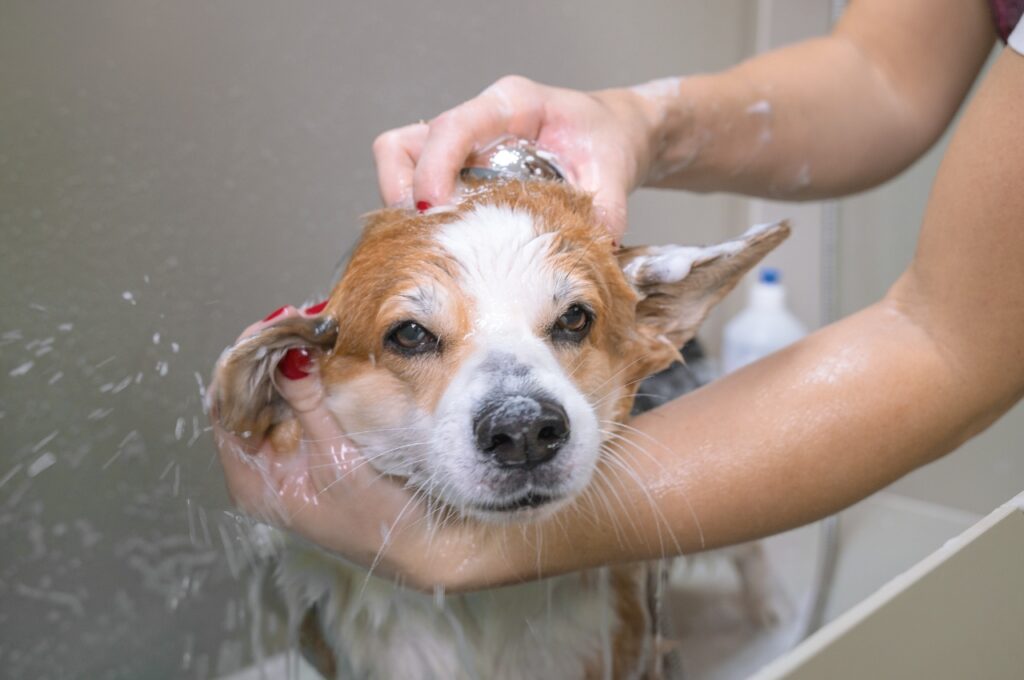
Hydrobathing is a professional dog washing service that uses temperature-controlled water, purpose-built tubs, and high-powered dryers to clean and dry your dog’s coat more thoroughly than a home bath usually allows. The water stays at a steady, comfortable temperature throughout, which helps anxious or sensitive dogs relax more than they might in a bath or shower with hot and cold patches.
At Paddington Pups, hydrobathing is available as both a self-service wash and a fully professional service, so owners can choose the level of support they want. Self-service hydrobathing suits owners who are happy to do the washing themselves but want better equipment and less mess at home. The fully professional option suits dogs who need calmer, more experienced handling, or owners who would rather leave the whole process to someone else.
The equipment is what actually changes the outcome. A home tub relies on your water heater, your hose attachment, and a stack of towels. A hydrobath uses commercial-grade heating and drying equipment built specifically for dogs, which is the main reason the results differ so much.
Is At-Home Bathing Enough for Your Dog?
Yes, at-home bathing can work well for many dogs, particularly short-haired breeds with no skin sensitivities who only need an occasional wash between visits to a groomer. If your dog tolerates the bath calmly, dries within an hour or two, and does not carry a thick undercoat, a home wash with a proper dog-specific shampoo is a perfectly reasonable part of your routine.
Where at-home bathing starts to fall short is with double-coated breeds, dogs who genuinely hate the bath, or dogs with skin conditions that need a specific product and a careful rinse routine. A home tub also makes it hard to safely reach a large or wriggly dog, and towel drying alone often leaves the undercoat damp for hours, particularly through a Brisbane summer when the air itself is humid rather than drying.
Research published in Frontiers in Veterinary Science highlights that inadequate grooming can lead to severe medical conditions, noting that long-haired breeds and mixes are particularly vulnerable to severe hair matting which can cause skin tightness, itching, and restrict airflow to the skin . If you are ever unsure whether your dog’s skin or coat needs more than a standard home bath, a chat with your vet is the safest place to start.
What Are the Benefits of Professional Hydrobathing?
Professional hydrobathing offers several practical advantages over a standard home wash.
Consistent water temperature keeps the experience calmer for nervous or elderly dogs who might otherwise flinch at a sudden hot or cold spot. Powerful drying equipment reaches the undercoat properly, rather than leaving it surface-dry while the layer underneath stays damp.
A thorough rinse cycle matters immensely because leftover shampoo residue is one of the most common causes of post-bath itching. A 2024 study in Veterinary Medicine: Research and Reports notes that Canine Atopic Dermatitis affects between 3% and 15% of the dog population, and skin barrier dysfunction is a primary characteristic of the condition . For these dogs, thorough rinsing to remove residue and protect the skin barrier is critical, a step often rushed during home baths.
Trained handling is essential for dogs who are wriggly, anxious, or simply too large to manage safely in a home bath or shower. Finally, a quick skin and coat check during the wash means early signs of matting, grass seeds, fleas, or irritation are more likely to be spotted before they become a bigger problem.
Taken together, these advantages tend to matter most for dogs who struggle with a home bath in the first place. A calm, confident short-haired dog might never notice the difference, while an anxious or large dog can find the whole experience far less stressful with steadier temperatures and more experienced hands.
None of this replaces regular dog grooming such as a Maintenance Groom or Full Groom. Hydrobathing and grooming work together, with hydrobathing handling the wash and dry, and grooming covering trims, coat shaping, and styles such as a Puppy Cut or Style Groom. How Do You Decide Between At-Home Bathing and Professional Hydrobathing?
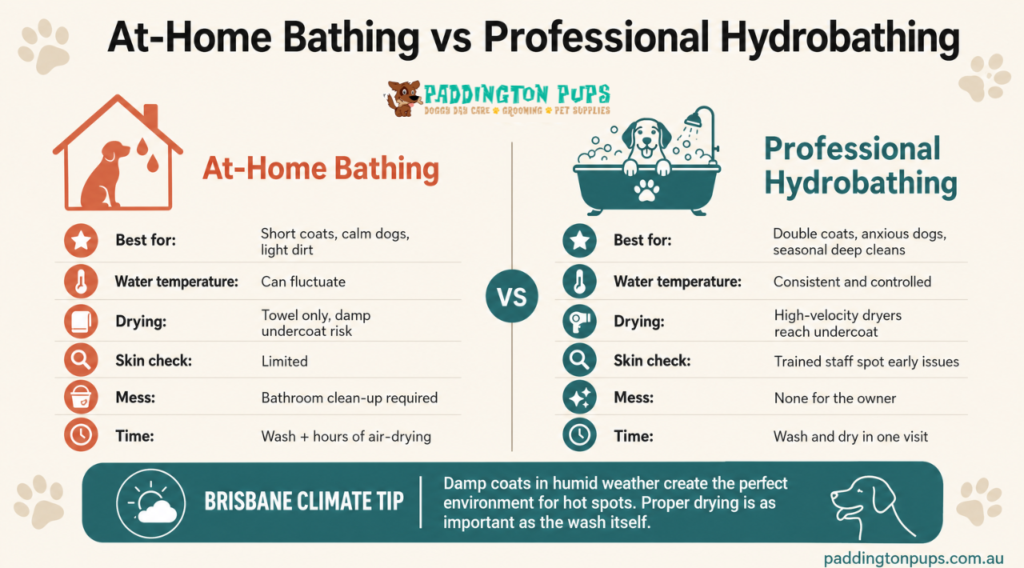
To decide between the two, think honestly about your dog’s coat type, temperament, and how much time you realistically have on a weekend. The table below breaks down the main differences.
Time is often the deciding factor that owners underestimate. A home bath itself might only take twenty minutes, but a thick-coated dog can take several hours to fully air-dry afterwards, and a damp dog let outside too soon simply picks up more dirt. A hydrobathing session bundles the wash and the dry into one visit, which can end up being the more time-efficient option even before you factor in the clean-up.
If your dog fits the “at-home” column most of the time, keep doing what already works. There is no need to change a routine that suits your dog. If several rows point toward professional hydrobathing, particularly around drying and handling, it is worth booking a session rather than persisting with a routine that leaves both of you frustrated every time.
When Does Brisbane’s Climate Make Professional Hydrobathing the Better Choice?
Brisbane’s humidity makes thorough drying especially important, because a coat that stays damp after a home bath is more likely to develop hot spots or skin irritation in warm, humid weather. According to veterinary experts, matted fur prevents air from reaching the skin and retains water, ensuring that the skin stays wet and creating a perfect environment for pyotraumatic dermatitis, commonly known as a hot spot.
The RSPCA’s own guidance notes that a temperature-controlled hydrobath is one option groomers, vets, and pet stores commonly offer, precisely because getting a dog properly dry matters as much as getting them clean .
Warmer months in Queensland also bring grass seeds, which can work their way into paws, ears, and between toes after a walk through longer grass in local parks. A professional hydrobathing session gives someone trained a chance to check for these while washing, rather than relying on a quick look at home after a long day at work.
Storm season is another reason many Brisbane owners shift toward hydrobathing over the wetter months. Air-drying a thick coat at home can take most of a humid afternoon, and a dog left slightly damp overnight is uncomfortable at best. Winter in southeast Queensland is mild enough that outdoor play, and the mess that comes with it, continues year-round, so the need for reliable washing and drying does not really let up the way it might further south.