Matted Dog Fur: Prevention and Safe Removal Techniques

A few small tangles can become a tight mat faster than many dog owners expect, especially after wet weather, swimming, muddy walks, or a week of skipped brushing. For long-haired, curly, or double-coated dogs, matted dog fur is not just an appearance issue. It can cause discomfort, hide skin problems, and make a routine grooming appointment more complicated than it needs to be.
 
The good news is that most matting is preventable. A regular at-home check, calm brushing habits, and timely will keep most coats manageable. When a mat is already tight or close to the skin, the kindest decision is usually to stop trying to pull it apart and seek help from a groomer or veterinarian.
 

What Is Matted Dog Fur?

Matted dog fur is hair that has tangled, twisted, and compacted into a dense knot. Loose hairs, undercoat, dirt, moisture, and friction all contribute. A mat may begin as a small tangle that is easy to feel with your fingers, then tighten over time as your dog moves, scratches, gets wet, or rubs against a collar or harness.
 
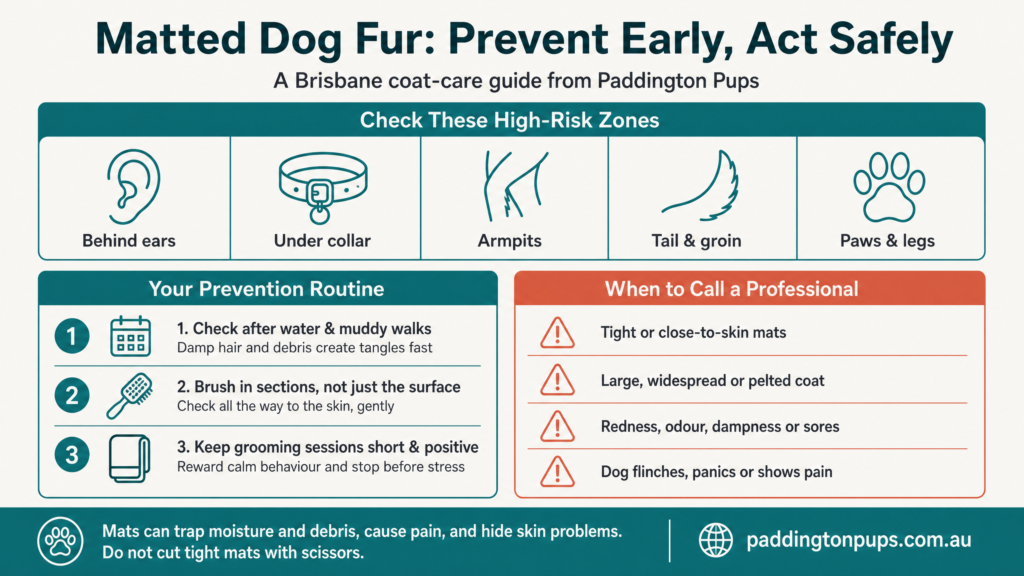
Mats are especially common in high-friction zones. The highlights the areas under collars, behind ears, and in armpits. Feet, the groin, belly, tail base, and the feathering on legs are also worth checking regularly .
 

Why Is Matted Dog Fur More Than a Cosmetic Issue?

Tight mats pull on the skin with every step, turn, scratch, and stretch. They can trap moisture, mud, grass seeds, faeces, urine, and other debris against the skin, creating conditions for irritation and infection. Severe matting can also hide wounds, parasites, lumps, or skin disease.
 
A 2022 peer-reviewed study of grooming-related concerns at ASPCA programs found that chronic matting can contribute to skin irritation and infection, recurrent ear and eye problems, urine scalding, faecal impaction, and parasitic infestations. In the most serious cases, encircling mats can restrict circulation and damage tissue . Across three ASPCA veterinary service programs in that study, 4% to 6% of appointments involved grooming-related observations or medically necessary grooming. These figures describe those programs, not the general dog population, but they show that grooming concerns can become a genuine welfare issue.
 
Matting level
What you may notice
Safest next step
Early tangle
Hair separates easily, the skin is not pulling, and your dog remains relaxed
Check it daily and gently work through it during a short, positive grooming session.
Established mat
A dense knot that resists a comb, often in a friction zone
Book a professional groomer before it tightens or spreads.
Severe or skin-tight matting
Large pelted areas, odour, dampness, redness, sores, pain, or distress when touched
Contact a professional groomer or veterinarian promptly. Do not attempt to cut the mat out yourself.

Which Dogs Are Most Likely to Develop Matted Fur?

Any dog can develop a mat, but some coat types need closer monitoring. Long-haired dogs, dogs with curly or continuously growing hair, and dogs with dense double coats are at higher risk because shed hair or loose undercoat can remain in the coat rather than falling away. Dogs that swim frequently, enjoy muddy Brisbane walks, wear harnesses for long periods, or have reduced mobility may also need more frequent checks.
 
Poodle crosses, Maltese, Shih Tzus, Cocker Spaniels, Cavaliers, Old English Sheepdogs, and many doodle-type coats often need consistent brushing and professional trimming. Double-coated dogs also need thorough coat care because loose undercoat can compact beneath the top coat. The that many double-coated dogs require very regular, thorough grooming and, in some cases, daily attention to prevent dead hair building up into mats .
 
The exact schedule depends on the individual dog. Coat length, density, activity level, health, and the Brisbane climate all matter. A dog who has just been swimming or caught in summer rain needs a more careful check than the same dog after a quiet, dry day indoors.
 

How Can You Prevent Matted Dog Fur at Home?

Prevention is far easier and more comfortable than trying to undo severe matting. The best approach is a simple, repeatable routine that keeps you ahead of tangles rather than reacting to them later.
 
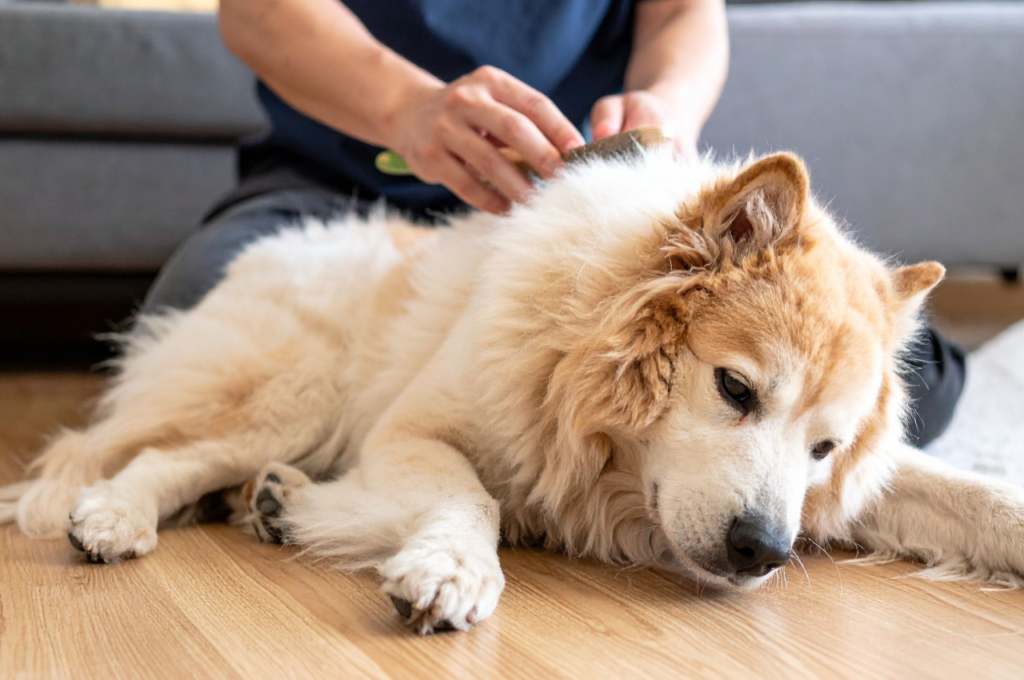
Start by getting your dog used to brief, pleasant handling. The RSPCA recommends beginning with short sessions, rewarding calm behaviour, and stopping before the dog becomes uncomfortable or agitated . Work in small sections rather than brushing only the top layer of the coat. A dog can look smooth on the surface while tangles are forming underneath.
 
“If your animal becomes uncomfortable or stressed, you should stop immediately.”
Routine moment
What to check
Why it matters
After walks and outdoor play
Grass seeds, burrs, twigs, mud, and damp areas
Foreign material creates friction and gives tangles a fast start.
After swimming, rain, or bathing
Undercoat, ear fringes, belly, legs, and armpits once the coat is dry
Damp coats and trapped loose hair are more likely to clump.
Weekly coat check
Behind ears, collar area, harness contact points, tail base, groin, and paws
These high-friction zones often mat before the rest of the coat.
Before a grooming appointment
New knots, sensitive areas, or changes in skin condition
Early notice helps the groomer choose the safest and most comfortable approach.
Use tools suited to your dog’s coat. Long-haired dogs generally need longer bristles and a wide-tooth comb, while short-coated dogs may need a softer brush. For thick undercoats, use a suitable undercoat tool with gentle, short strokes rather than scraping or pulling the skin. If you are unsure which brush fits your dog, ask your groomer or vet for a demonstration.
 
A regular routine can help keep a dog’s coat clean, but it does not replace brushing. After any bath, the coat needs to be thoroughly dried and checked for loose hair or tangles. For more practical time-saving advice, see our guide on how to .

What Can You Safely Do When You Find a Mat?

First, assess the mat honestly. A small, loose surface tangle on a relaxed dog is different from a dense knot pressed against delicate skin. If you can easily separate the hair with your fingers and your dog is comfortable, a brief, gentle session using an appropriate comb may be reasonable. Work slowly in the direction of hair growth, take breaks, and reward your dog for staying calm.
 
Stop immediately if the hair does not move freely, the mat is close to the skin, your dog flinches or pulls away, or you cannot clearly see where the skin begins. Do not try to force a comb through a tight mat, and do not use scissors to cut close-to-skin knots. Mats can pull thin, fragile skin up into the tangle. The USDA notes that scissors can cut the skin and clippers can cause burns if they overheat .
 
For a tight or widespread mat, arranging professional grooming is safer and usually less stressful than repeated home attempts. A groomer can assess whether gentle de-matting is realistic or whether clipping the coat short is the most humane choice. This is not a failure. A fresh, comfortable start often makes it much easier to establish a sustainable routine afterwards.
 

When Should You Choose Professional Grooming or Veterinary Help?

Choose a professional groomer when mats are dense, large, numerous, close to the skin, or in sensitive areas such as the ears, armpits, groin, tail, feet, or around the eyes. Grooming support is also a sensible choice if your dog dislikes handling, has limited mobility, or cannot cope with long brushing sessions at home.
 
Contact your veterinarian if you notice redness, sores, odour, swelling, damp skin, discharge, parasites, broken skin, significant pain, or a sudden change in coat quality. You should also speak with your vet if your dog becomes unusually sensitive to grooming, as discomfort can sometimes indicate an underlying skin, ear, joint, or dental issue.
 
The recommends using a trusted professional groomer or veterinarian when a tangle is difficult, close to the skin, or cannot be safely trimmed at home .
 

How Does Professional Grooming Help Prevent Matted Fur?

Professional grooming provides a consistent reset for dogs with coats that mat easily. A groomer can thoroughly clean, dry, brush, and trim the coat as required, while checking the areas owners often miss. This is particularly valuable in Brisbane, where humidity, summer storms, muddy parks, and regular water play can accelerate knotting.
 
At Paddington Pups, grooming appointments can support the routine you build at home. The goal is not to wait until the coat is severely tangled. Regular grooming lets owners catch changes early, maintain a practical clip length, and keep home brushing comfortable for both dog and owner.
 
If you are not sure what your dog needs, to discuss a grooming routine that suits their coat and lifestyle. New clients can also visit our to get started.
 

What Mistakes Make Matted Dog Fur Worse?

Several well-intended habits can allow small tangles to become a bigger welfare issue.
  • Only brushing the surface: This can make the coat look tidy while tangles build underneath. Separate the coat into sections so you can check down to the skin without pulling.
  • Skipping checks after water and muddy play: Dampness, loose hair, and debris can turn a small knot into a dense mat quickly.
  • Using force to get a comb through: Pulling makes grooming painful and may teach a dog to fear handling.
  • Cutting a tight mat with household scissors: The skin can be drawn into the mat. Professional clipping is safer for close-to-skin knots.
  • Waiting until the dog is heavily matted to book grooming: Earlier appointments are generally more comfortable and give more coat-care options.

How Can You Keep Your Dog Comfortable and Mat-Free?

Matted dog fur is a preventable problem when coat care becomes part of the normal weekly routine. Check high-friction areas, use the right tools gently, build positive associations with handling, and act early when you find a tangle. This protects more than your dog’s appearance. It protects their comfort, movement, skin health, and confidence around grooming.
 
For Brisbane dogs with high-maintenance coats, regular is a practical partnership between home care and professional support. A little consistency now can prevent a painful, time-consuming problem later.

FAQs

How quickly can dog fur become matted?

It depends on coat type, moisture, friction, and activity. A small tangle can tighten quickly after swimming, wet weather, a muddy walk, or repeated rubbing from a collar or harness. Checking high-risk areas after these events is the best way to catch it early.

Avoid cutting a mat that is tight or close to the skin. Mats can pull the skin into the knot, making accidental cuts more likely. The safest option is to ask a professional groomer or veterinarian to assess it.

Bathing cleans the coat, but it does not replace brushing or remove dense mats safely. A coat should be thoroughly dried and checked after bathing. If the fur is already tightly matted, contact a professional before attempting to wash or cut it at home.

Check behind the ears, under the collar or harness, in armpits, around the legs and tail, on the belly, in the groin, and between the paw pads. These areas experience more rubbing, moisture, or trapped debris.

Possibly. When mats are tight, widespread, or painful, clipping the coat short may be the safest and kindest option. A professional groomer or veterinarian can assess whether a shorter clip is needed and help you make a prevention plan for regrowth.
Scroll to Top