Bringing home a crate can feel like one more thing to figure out when you already have a puppy who needs your attention, a rescue dog finding their feet or a busy household to manage. The good news is that crate training does not need to be complicated. At its best, it is simply about helping your dog see the crate as a comfortable little space where good things happen.
At Paddington Pups, we know that the best routines are the ones that make dogs feel secure as well as making life a little easier for their people. A crate can support toilet training, travel and brief quiet time, but it should never be used to keep a dog shut away for long periods or to deal with a behaviour concern on its own. The aim is not to make your dog tolerate the crate. The aim is to help them choose it willingly and settle comfortably inside it.
That is why a calm, reward-based approach matters. RSPCA Australia supports reward-based training that sets dogs up to succeed and rewards the behaviour we want to see, rather than using aversive techniques or physical punishment. With a few small steps and plenty of patience, you can help your dog build a positive relationship with their crate.
What Is Crate Training and When Can It Help Your Dog?
Crate training teaches your dog that an appropriately sized crate is a safe place to rest for short periods. Some dogs come to love their crate and wander in for a nap with the door open. Others need more time and reassurance. Both responses are completely normal.
A positive crate routine can be useful when your dog is learning household habits, travelling, needs a quiet break from a busy room or has been advised by a veterinarian to rest after illness or surgery. Being comfortable with a crate can also make necessary confinement at a veterinary clinic less unfamiliar.
A crate is not the right answer for every dog or every home. A puppy-proofed room, a playpen or a gated space may suit some dogs better, particularly if they need more room to move or are still learning to feel safe when separated from the family. The best setup is the one that keeps your dog comfortable, safe and supported.
What Are the Benefits of Positive Crate Training?
When a dog feels genuinely comfortable in their crate, it can become a useful part of a wider routine. It is not a cure for chewing, barking or distress, but it can give your dog a familiar place to settle when crate time is short and thoughtfully planned.
Positive crate training may help your dog:
- Enjoy a familiar resting place at home or during a change in routine.
- Practise brief, safe periods without close supervision while they are still learning household and toilet habits.
- Feel more prepared for travel when a crate is needed for the journey.
- Cope more easily with veterinary-directed rest if they are ever recovering from an illness, injury or procedure.
- Take a break from the household when they need quiet time away from visitors, children or other pets.
The important part is balance. Your dog still needs exercise, enrichment, toilet breaks, training and time with the people they love. RSPCA Victoria advises that crates should be used for short periods only and should never take the place of a dog’s exercise and enrichment.
How Do You Choose and Set Up a Crate That Feels Safe?
Think of the crate as your dog’s small bedroom, not a storage space. It should be large enough for them to stand up, turn around, lie down and stretch comfortably. For a growing puppy, you can use a divider or adjust the crate as they grow so it continues to feel snug without becoming restrictive.
Choose a spot where your dog can still feel part of everyday family life. For many Brisbane homes, an indoor, well-ventilated space away from direct sun is a sensible choice, especially during humid weather. Keep the crate clear of cords, curtains and anything your dog could pull inside.
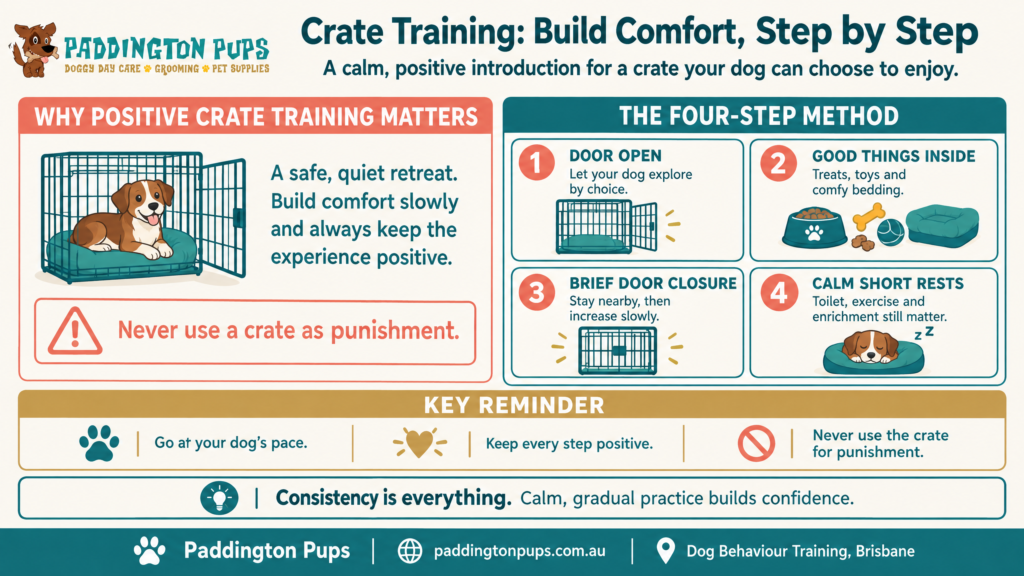
Never send your dog to the crate because they have made a mistake. A reward-based approach means helping your dog associate the crate with comfort and good experiences, rather than punishment. We want your dog to see the crate and think, “This is a good place to be.”
How Do You Crate Train Your Dog Step by Step?
Slow and steady is the kindest way to crate train. Start when your dog is calm, has had the chance to toilet and is not already full of energy. Keep each session short, light and positive. If your dog looks worried, you have simply moved a little too quickly. There is no need to push on.
1. Start with the door open. Put the crate in a familiar area and secure the door open. Scatter a few treats near the entrance, then let your dog investigate in their own time. You can gradually place treats, a favourite toy or a portion of their meal farther inside. Let them decide whether to step in. There is no need to force the moment.
2. Make the crate worth visiting. When your dog is happily going inside, offer part of their meal, a safe chew or a food toy in the crate with the door still open. They should be able to wander in and out freely. These quiet, positive experiences are what build confidence.
3. Close the door for a few seconds. Once your dog is settled inside with something enjoyable, gently close the door while you stay nearby. Open it again before they become concerned. Repeat this over several short sessions, adding only a little more time when your dog remains relaxed.
4. Practise a little distance. When your dog is comfortable with the door closed while you sit close by, take a step away and return. Work up slowly to moving around the room, then briefly stepping out of sight. Keep the early absences very short and return before your dog becomes unsettled.
5. Create a calm entry and exit routine. Add a simple cue such as “bed” or “crate” after your dog is already choosing to go in. Reward the entry, then wait for a quiet pause before opening the door. This small routine can help your dog move in and out calmly rather than rushing.
Your dog is always giving you feedback. Hesitating to enter, refusing food, repeated escape attempts or escalating vocalising are signs that the step may feel too hard. End the session calmly and return to an easier stage next time. If your dog continues to show distress, speak with your veterinarian or a qualified behaviour professional before you progress.
How Long Does Crate Training Take?
Every dog learns at their own pace, so there is no magic crate-training timeline. A confident puppy may start settling after a handful of short sessions. An adult rescue dog, a sensitive dog or a dog who has had an unhappy experience with confinement may need several weeks or longer. Their age, personality, past experiences and your training pace all make a difference.
Try not to let the calendar decide what happens next. Instead, watch your dog. If they are walking in readily, eating or chewing comfortably and remaining relaxed at the current step, you can try a very small increase. If that change makes them worried, make the next session easier. Going back a step is not a setback. It is good training.
Crate time should always be planned around toileting, movement, enrichment and company. RSPCA Victoria advises that crates are for short periods, should not replace exercise or enrichment, and that young puppies need a toilet break at least every two to three hours. Think of this as a welfare boundary, not a goal to stretch towards.
What Does a Healthy Crate Routine Look Like?
A crate should fit into your dog’s day, not take it over. Before crate time, make sure your dog has had the chance to toilet and has enough activity for their age and health. When they come out, they need the same care again: another toilet opportunity, movement, connection and time to enjoy life outside the crate.
For Brisbane dog owners, this might mean keeping morning practice brief before work, choosing a cool spot during warmer weather or changing your plan on a day when your dog is unwell or unsettled. A flexible routine is often the most thoughtful one.
Can a Crate Fix Separation Anxiety or Serious Distress?
No. A crate is not a treatment for separation anxiety. If your dog has repeated escape attempts, destructive behaviour, prolonged vocalising or an inability to settle when left alone, pause crate training and speak with your veterinarian. RSPCA Victoria notes that separation anxiety has no quick fix and recommends working with a behaviourist where possible.
Your veterinarian can help rule out pain or medical concerns and may refer you to a qualified behaviour professional. In the meantime, look for management that keeps your dog safe without asking them to cope with more than they can handle.
How Can Crate Training Fit into a Busy Brisbane Routine?
A crate can be helpful for short practice sessions at home, but it is not the answer to a full workday. Dogs still need movement, enrichment, companionship and regular time out of the crate. When your schedule means your dog needs care during the day, it is worth choosing an arrangement that supports those needs rather than extending confinement.
At Paddington Pups, our doggy daycare gives dogs a place to socialise, exercise and play. The service is walk-in, with a first-day assessment required before return visits. It is separate from crate training, and the published service information does not describe individual crating as part of daycare.
If you need overnight care, our boarding service requires a daycare trial before boarding and includes large play areas, daily walks, overnight monitoring and large sleeping areas with premium beds. If you are new to Paddington Pups, you can get started through our new customer form.
A crate can be a valuable life skill, but the measure of success is not how long your dog can stay shut in. It is whether they walk in happily, settle comfortably and still enjoy a full, connected life outside it. Start small, celebrate the calm moments and let your dog set the pace.