Ear problems are one of the most common health issues vets see in Brisbane dogs, and one of the most preventable. The challenge is that the signs often start subtly. A dog scratches at one ear occasionally, shakes its head a little more than usual, or starts to resist having its ears touched. By the time the smell or discharge becomes obvious, the infection has usually been developing for some time.
Brisbane’s subtropical climate is a significant part of why ear issues are so prevalent here. High humidity, regular rain, wet-season swimming, and warm temperatures create exactly the conditions that allow bacteria and yeast to grow quickly in a dog’s ear canal. Understanding what to watch for, how to clean ears safely at home, and when to involve a professional makes a real difference to how quickly problems are caught and how easily they are resolved.
Why Are Dog Ear Problems So Common in Brisbane?
Dog ears are naturally warm and, in many breeds, poorly ventilated. The ear canal in dogs runs vertically and then horizontally before reaching the eardrum, which means moisture that enters the ear has limited ability to drain or evaporate quickly. In a dry climate, this is manageable. In Brisbane’s humidity, it is a recurring challenge.
What Makes Brisbane Dogs More Vulnerable?
Several factors specific to Queensland’s environment increase the risk of ear problems:
Humidity: The moisture in Brisbane’s air raises the baseline humidity inside a dog’s ear canal throughout the year. This creates conditions where bacteria and yeast can grow even without the dog swimming or getting wet directly.
Wet season: From roughly November through April, dogs walk through wet grass, get caught in afternoon storms, and track moisture into the house repeatedly. Each time a dog’s ears get wet and do not dry thoroughly, the risk of infection increases.
Swimming: Brisbane’s warm climate means many dogs swim regularly, whether at beaches, rivers, or backyard pools. Water trapped in the ear after swimming is one of the most common triggers for ear infections in active dogs.
Breed characteristics: Some breeds are significantly more prone to ear problems than others. Dogs with floppy ears such as Spaniels, Basset Hounds, and Golden Retrievers trap more moisture and have less airflow. Dogs with hair growing inside the ear canal, such as Poodles and their crosses, can develop blockages if that hair is not regularly managed. These breeds need more frequent ear monitoring in any climate, and especially in Queensland.
What Are the Symptoms of Dog Ear Problems?
Spotting problems early is the most important thing an owner can do. An ear issue caught in the first few days is usually straightforward to manage. One that has been developing for weeks becomes more entrenched and more uncomfortable for the dog.
What Should You Watch For?
| Symptom | What It Looks Like | What It Usually Means |
|---|---|---|
| Scratching | Repeated, focused scratching at one ear or rubbing along the floor. | Early sign of discomfort, irritation, or ear mites. |
| Head Shaking | Frequent head shaking throughout the day, beyond normal post-swim shaking. | Irritation or moisture trapped in the ear canal. |
| Head Tilting | Holding the head tilted to one side more than usual. | Discomfort or imbalance related to the inner ear. |
| Odour | Noticeable or unpleasant smell (healthy ears have a neutral smell). | Clear early indicator of bacterial infection or yeast overgrowth. |
| Discharge | Darker than usual, unusually thick, or yellow/green in colour. | Active infection requiring veterinary attention. |
| Redness/Swelling | Ear flap or visible canal looks red, swollen, or inflamed. | Inflammation that needs immediate attention. |
| Sensitivity | Pulling away, flinching, or resisting when ears are touched. | The dog is experiencing pain in the ear. |
What Is the Difference Between Ear Mites and Ear Infections?
Both cause similar discomfort, but they look and behave differently.
Ear mites tend to produce very dark, dry, crumbly debris in the ear canal that resembles coffee grounds. They are most common in puppies and in dogs that have had contact with other affected animals. The itching associated with ear mites is often intense, and affected dogs shake their heads and scratch frequently.
Ear infections caused by bacteria or yeast tend to produce wetter discharge with a noticeable smell. Yeast infections in particular have a distinctive sweet or musty odour. The appearance of the discharge, combined with smell and the pattern of symptoms, helps a vet determine what type of infection is present and which treatment is appropriate.
If you are unsure whether your dog has ear mites, an infection, or something else, do not attempt to treat it at home based on a guess. A vet can take a quick sample from the ear canal and look at it under a microscope to identify what is causing the problem. This makes treatment much more targeted and effective.
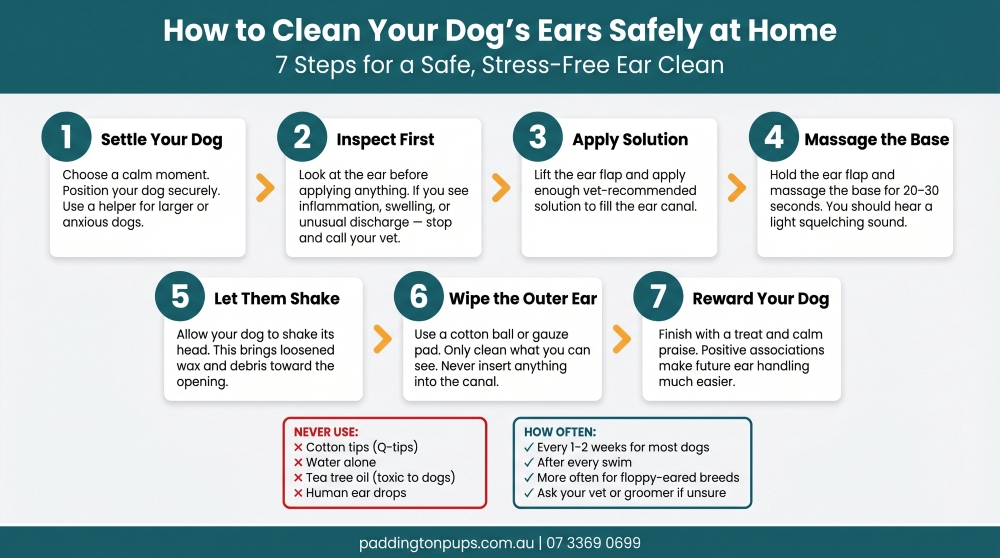
How Do You Clean a Dog’s Ears Safely at Home?
What Do You Need Before You Start?
What Is the Correct Technique?
How Often Should You Clean Your Dog’s Ears?
Animal Poisons Helpline Australia. “Tea Tree Oil Toxicity in Dogs.”
What Ear Care Products Are Safe for Dogs?
What Role Does Professional Grooming Play in Ear Health?
When Should You See a Vet?
Home care and professional grooming handle routine ear maintenance well, but there are situations that require veterinary attention rather than continued home management.
You should contact your vet promptly if:
- Your dog is in visible pain or distress around the ear
- There is significant swelling of the ear flap or around the ear
- The discharge is heavy, coloured (yellow or green), or has a very strong smell
- Your dog has been scratching and shaking for more than a day or two without improvement
- You can see signs of broken skin or bleeding around the ear from scratching
- Your dog’s symptoms have returned shortly after a previous ear infection was treated
Do not attempt to treat an active infection at home with over-the-counter products. Ear infections caused by bacteria and those caused by yeast require different treatments. Using the wrong product can make the infection worse or mask symptoms while the underlying issue continues to develop. A vet can identify what is causing the problem and prescribe appropriate treatment.
A Simple Ear Care Routine for Brisbane Dogs
Consistent, simple ear care prevents most of the problems that bring Brisbane dogs to the vet. The basics are straightforward:
Check your dog’s ears weekly as part of regular handling. Look for redness, smell, discharge, or sensitivity to touch. Clean every one to two weeks using a vet-recommended solution and cotton balls, and dry ears thoroughly after swimming or bathing. Build professional grooming appointments into a regular schedule and ask for ear cleaning to be included. Contact your vet promptly if symptoms suggest infection rather than routine wax buildup.
Brisbane’s climate makes ear care more demanding than in cooler cities, but with the right routine, it is entirely manageable.
Booking at Paddington Pups
Our grooming team is available Monday to Friday by appointment. Ear cleaning can be added to any grooming service. If you have questions about your dog’s ear health or would like advice on what to watch for between appointments, our team is happy to help.
New customers can register through our website to get started. Existing customers can book directly through our online grooming booking system.
RSPCA Australia. “Does My Pet Have Allergies?”
FAQs
Can I use cotton tips (Q-tips) to clean
No. Cotton tips should never be used inside a dog’s ear canal. They can push wax and debris further down into the ear, causing blockages, and there is a high risk of accidentally puncturing the eardrum if your dog moves suddenly. Always use cotton balls or gauze pads to wipe only the visible parts of the ear.
Why does my dog's ear smell sweet or musty?
A sweet or musty odour coming from a dog’s ear is a classic sign of a yeast infection. Yeast thrives in warm, moist environments, making it very common in Brisbane’s humid climate. This requires veterinary diagnosis and specific antifungal treatment, not just home cleaning.
Is it safe to use human ear drops or cleaners on my dog?
No. Human ear products are formulated for a different ear anatomy and a different pH level. Using them on a dog can cause severe irritation or worsen an existing problem. Always use a veterinary-recommended product specifically formulated for dogs.
My dog swims every weekend. How do I prevent ear infections?
The most important step is ensuring the ears dry completely after swimming. Use a clean towel or cotton balls to gently dry the visible parts of the ear, and consider using a vet-approved drying solution or ear cleaner immediately after swimming to help evaporate trapped moisture before bacteria can multiply.
Can a groomer treat an ear infection?
No. Professional groomers can perform routine ear cleaning and are excellent at spotting the early signs of ear problems, but they cannot diagnose or treat active infections. If a groomer notices significant redness, swelling, or unusual discharge, they will recommend you see a vet for proper medical treatment.