When a dog develops skin symptoms around grooming time, there are several possible explanations. Getting the right one matters before making any changes to products or routines.
Product Reactions
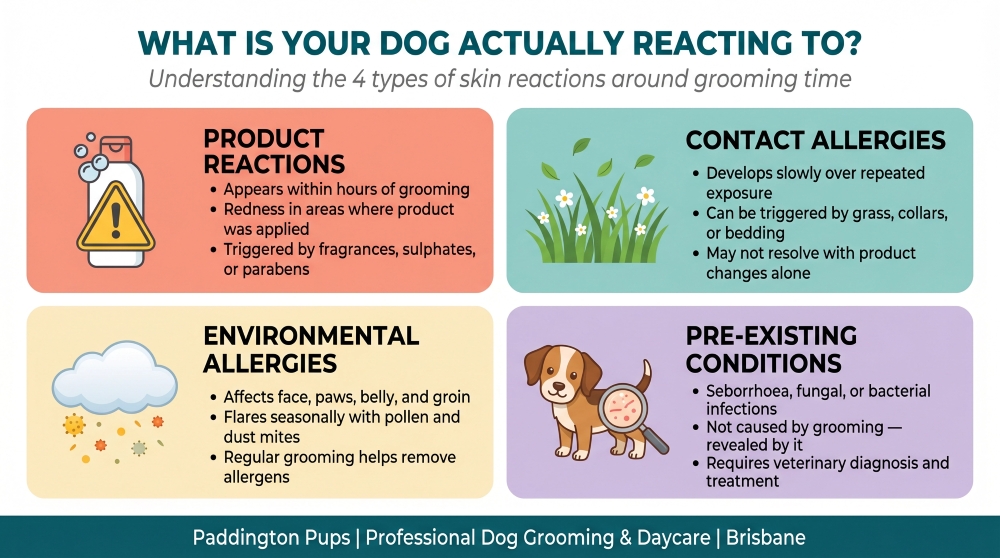
A reaction to a specific grooming product usually appears fairly quickly after it is applied, typically within a few hours of the bath or groom. Signs include redness in the areas where the product was used, itching that is focused in those same areas rather than spread across the body, and skin that feels warm or looks inflamed where the product made contact.
If you suspect a product reaction, the practical response is to switch to a fragrance-free, hypoallergenic formula and see whether the reaction stops. Artificial fragrances, sulphates, parabens, and artificial colours are the most common triggers for contact reactions in dogs with sensitive skin.
At Paddington Pups, we use pet-safe grooming products and have hypoallergenic options available for dogs with known sensitivities. If your dog has a history of product reactions, let our team know at drop-off so we can use the most suitable formula for their appointment.
Contact Allergies
Contact allergies develop when a dog’s skin reacts to a specific material it touches repeatedly. Unlike product reactions, these often take time to develop. A dog may tolerate a product well for months before a sensitivity develops with repeated exposure.
Contact allergies can also be triggered by things unrelated to grooming: specific grass types at a local park, a new bed, a collar material, or cleaning products used on floors the dog walks on. If your dog’s skin symptoms do not resolve when you switch grooming products, a contact allergy to something in the broader environment is worth considering. Your vet can help identify likely triggers through an elimination approach or patch testing.
Environmental Allergies
Environmental allergies, such as reactions to pollens, dust mites, moulds, and other airborne or surface particles, are very common in Brisbane dogs and are often mistaken for grooming product reactions because they tend to flare seasonally.
A dog with environmental allergies will typically show itching, redness, or irritation that is not limited to areas where grooming products were applied. The face, paws, belly, and groin are often affected because these areas have the most direct contact with environmental allergens during daily life. Paw licking after outdoor walks is a particularly common sign.
Pre-Existing Skin Conditions
Some dogs have underlying skin conditions such as seborrhoea, fungal infections, or recurrent bacterial infections that present as irritation or redness. These conditions are not caused by grooming but may become more visible after a groom when the coat is clean and the skin easier to see.
If your dog has persistent skin symptoms that do not resolve with product changes or improved grooming routines, a vet assessment is the right next step. Our groomers notice changes in a dog’s skin during appointments and will let you know if something looks worth following up.
Choosing Safer Grooming Products for Sensitive Dogs
For owners managing dogs with sensitive skin or known allergies, product selection makes a genuine difference to how the dog responds during and after grooming.
Ingredient / Feature | Why It Matters for Sensitive Dogs |
Fragrance-Free | Artificial fragrances are one of the most common sources of contact reactions. True fragrance-free products remove this risk entirely. |
Hypoallergenic | Formulated to minimise the ingredients most commonly associated with reactions. A sensible first choice for sensitive dogs. |
Oatmeal-Based | Oatmeal soothes irritated skin, helps relieve itching, and supports the skin’s moisture barrier. |
Aloe & Chamomile | Skin-conditioning ingredients that support the barrier without adding potential irritants. Moisturising and calming. |
pH-Balanced | Dog skin has a different pH to human skin. Correct pH formulation protects the skin’s natural defences. |
What to Avoid
Artificial colours and dyes. These add no benefit for the dog and are unnecessary potential irritants.
Sulphates as the primary cleanser. Sulphates clean effectively but can strip natural oils and cause dryness and irritation, particularly with repeated use on already sensitive skin.
Parabens. These preservatives are used in many personal care products but can cause reactions in sensitive animals.
Tea tree oil. While it has some natural properties, tea tree oil is toxic to dogs when absorbed through skin or ingested, and should never be used in or near a dog’s ears, on skin, or in any product applied directly to a dog.
Human grooming products. Human shampoos and conditioners are formulated for human skin pH and hair structure. Using them on dogs, even occasionally, can disrupt the skin’s protective barrier and cause dryness and irritation.
How to Spot Signs of Skin Reactions During and After Grooming
Recognising the early signs of a reaction allows you to respond before the problem develops further. The most common signs to watch for are:
Excessive scratching after a bath or groom, particularly if it is focused on areas where products were applied rather than spread across the whole body.
Red or inflamed skin visible on the belly, around the ears, between the toes, or on the face. These are the areas where skin is thinnest and most exposed during and after grooming.
Watery or irritated eyes accompanied by pawing at the face. This can indicate a reaction to airborne products or fragrances in the grooming environment.
Raised skin, hives, or welts appearing within a few hours of grooming are a clear sign of a more significant reaction and warrant a call to your vet, particularly if they are accompanied by swelling around the face or any sign of breathing difficulty.
Persistent itching or licking in the days following a groom, rather than immediately afterward, is more likely to indicate an environmental trigger than a product reaction.
If you notice any of these signs after your dog’s appointment at Paddington Pups, let us know. Our team can note the products used during that session, which helps narrow down potential causes if a pattern develops over multiple visits.
What Safe Grooming Looks Like in Practice
Safe grooming for a sensitive dog is not just about the products used. It also involves how the dog is handled, how the environment is maintained, and how consistently the same approach is applied across appointments.
Gentle, calm handling. Dogs that are anxious or stressed during grooming produce higher levels of cortisol, which can increase skin sensitivity and inflammation. A patient grooming approach reduces stress and makes the skin less reactive during the session. This is particularly important for dogs that have had difficult grooming experiences in the past.
Clean equipment between dogs. Grooming tools that are not properly cleaned between appointments can carry bacteria, yeast, and allergens from one dog to the next. At Paddington Pups, our grooming area and equipment are maintained to vet-grade cleanliness standards.
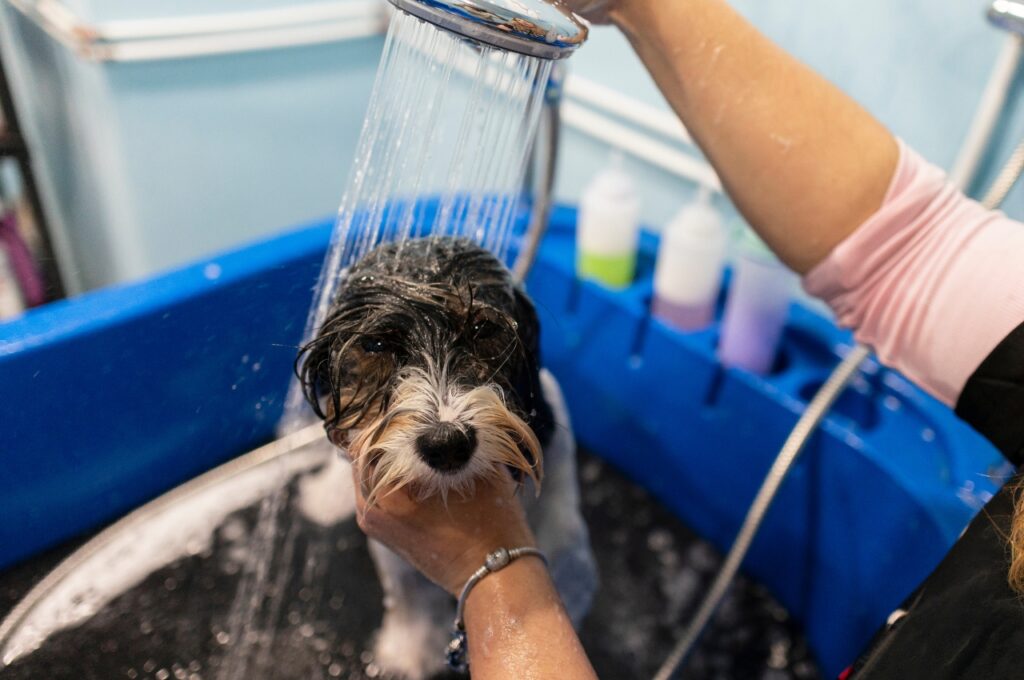
Thorough rinsing. Product residue left in the coat after shampooing is one of the more common causes of post-groom irritation. Thorough rinsing, particularly through the undercoat, removes all product traces. Hydrobathing, which uses warm pressurised water to penetrate deep into the coat, is especially effective at achieving a complete rinse.
Complete drying. A dog leaving a groom appointment still damp, particularly in Brisbane’s humid conditions, will have moisture sitting against its skin for hours afterward. This creates the conditions where skin irritation and yeast overgrowth can develop. Professional blow-drying after every hydrobath at Paddington Pups reduces this risk significantly.
How Daycare Supports Allergy-Prone Dogs
For dogs with ongoing skin sensitivity or known allergies, the combination of grooming and doggy daycare at the same facility offers a practical advantage: consistent observation by staff who know your dog well.
Skin conditions and allergy symptoms can change gradually in ways that are easy to miss if you only see your dog at home. Staff who see a dog regularly in daycare notice changes in coat condition, scratching behaviour, and skin appearance that might not be obvious to an owner until the symptoms become more significant.
If our daycare team notices your dog scratching persistently, chewing at its paws, or showing visible skin changes during the day, we will let you know. Catching these signs early means you can respond before a mild irritation becomes a more established problem.
When to Involve a Vet
Professional grooming and careful product selection manage most mild skin sensitivities well. There are situations, though, where veterinary input is the right response.
Contact your vet promptly if your dog shows signs of a significant allergic reaction such as hives, facial swelling, or any difficulty breathing after grooming. These require immediate attention.
See your vet if skin symptoms are persistent, spreading, or not responding to product changes, as this may indicate an underlying condition that needs diagnosis and specific treatment.
Ask your vet about allergy testing if your dog has recurrent skin symptoms that follow a seasonal pattern or appear to be related to specific environments or activities. Identifying the trigger makes management much more targeted than trial and error with products alone.
Your vet and your groomer can work together effectively. Our groomers can tell you exactly what products were used during your dog’s appointment, which helps your vet assess potential triggers. If your vet recommends specific shampoos or a modified grooming approach for your dog, let us know and we will follow those recommendations at every appointment.
Booking at Paddington Pups
Our grooming team is available Monday to Friday by appointment. If your dog has known skin sensitivities or allergies, please mention this when you book so we can ensure the right products are ready for their appointment.
New customers can register through our website to get started. Existing customers can book directly through our online grooming system. After their groom, dogs can stay on and join the daycare group through our Stay and Play option rather than waiting for pickup. Additional daycare charges apply.