Most canine allergies fall into three categories. Knowing which type your dog has, and recognising that many dogs have more than one, shapes every other decision you make about their management.
Environmental Allergies
Environmental allergies, also called atopic dermatitis, are reactions to airborne or surface allergens including grass pollens, tree pollens, dust mites, and mould spores. They are the most common type of allergy in Brisbane dogs and the one most directly shaped by Queensland’s climate.
Brisbane’s year-round warmth keeps pollen and mould active for more of the year than in cooler southern states. The wet season from November through April brings additional mould and humid conditions that exacerbate existing skin sensitivities. Dogs with environmental allergies in Brisbane often show symptoms across a wider portion of the year than dogs with the same condition living in Melbourne or Canberra, and their management needs to account for this.
Where environmental allergies show up: The face and muzzle, paws, belly, groin, and armpits. These are the areas with the most direct contact with ground-level allergens during walks. Paw licking after outdoor activity is one of the most consistent early signs.
Food Allergies
Food allergies are less common than environmental allergies but are often the first thing Brisbane dog owners suspect when their dog develops skin symptoms. True food allergies involve an immune response to a specific ingredient, most commonly a protein such as beef, chicken, dairy, or lamb. Food sensitivities, which cause digestive upset without an immune response, are a separate issue.
The definitive way to identify a food allergy is a veterinary-supervised elimination diet lasting eight to twelve weeks, during which the dog eats only a novel protein or hydrolysed diet with nothing else passing their lips. This is the only reliable diagnostic approach. Allergy testing for food allergies is not diagnostically reliable in the way it is for environmental allergens.
Where food allergies show up: Typically the ears, feet, and face, and often the gastrointestinal system as well. A dog with recurring ear infections alongside skin symptoms is often suspected of having a food allergy component.
Contact Allergies
Contact allergies are reactions to specific materials the dog’s skin touches directly: certain grasses, collar materials, bedding fabrics, cleaning products used on floors, or plants in the garden. They tend to affect the areas of the body with the least coat protection, such as the belly, paws, and muzzle.
Contact allergies are often identified by process of elimination. If a dog’s skin symptoms are concentrated in a specific pattern that maps to what the dog is touching, for example, a rectangular rash on the belly corresponding to a new synthetic mat, a contact allergy is likely.
What Is the Best Weekly Management Routine for Allergic Brisbane Dogs?
Allergy management is not a one-time intervention. It is a consistent routine that reduces allergen accumulation, maintains the skin barrier, and catches flare-ups early enough to address them before they become significant.
Daily Habits That Make a Measurable Difference
Paw wipes after outdoor activity. Brisbane dogs walk through allergen-loaded grass, paths, and parks every day. Allergens absorbed through the paws are one of the primary drivers of environmental allergy symptoms. A quick wipe of paws and belly with a damp cloth or pet-safe wipe after outdoor walks removes surface allergens before they are tracked inside and licked off.
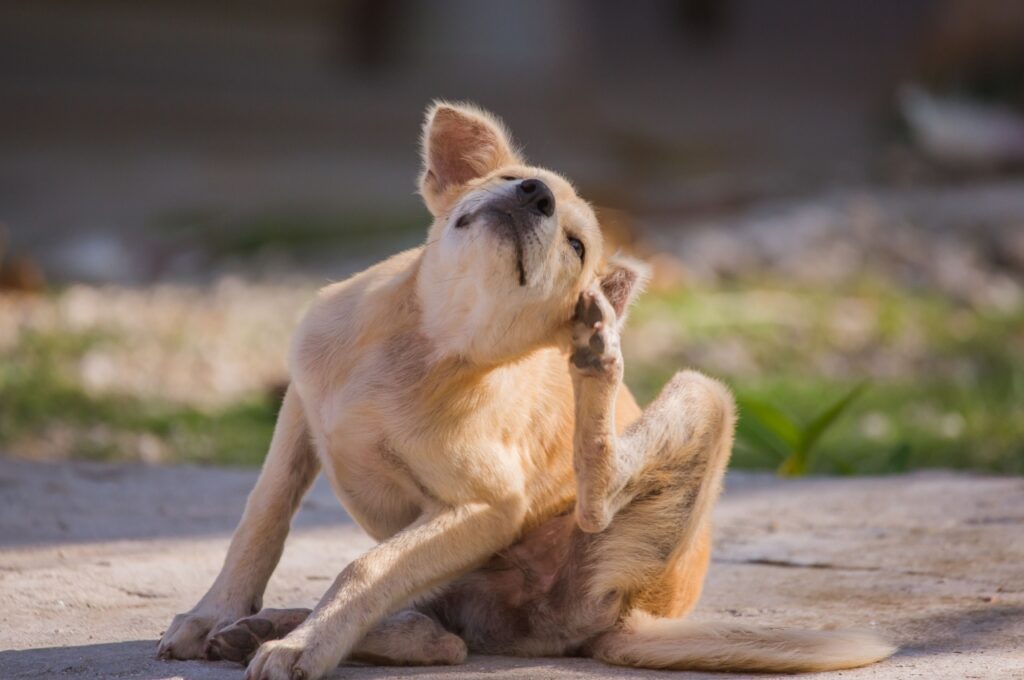
Monitoring paw licking and scratching. Excessive paw licking, face rubbing, or scratching concentrated in one area is usually one of the first visible signs that allergen load is building. Keep a loose mental note of your dog’s baseline, the normal amount of paw licking after a walk, and notice when it increases. Early intervention is significantly more effective than managing a fully established flare-up.
Keeping indoor surfaces clean. Dust mites, a common trigger for atopic dogs, accumulate in carpets, soft furnishings, and pet bedding. Regular washing of your dog’s bedding in hot water, vacuuming soft surfaces frequently, and keeping your dog’s sleeping area well-ventilated reduces indoor allergen load meaningfully.
Weekly Habits
Bathing or wiping down the coat. For dogs with environmental allergies, regular bathing removes accumulated allergens from the coat surface. For most Brisbane allergic dogs, bathing every one to two weeks during peak pollen or mould seasons is appropriate, compared to the standard interval of three to four weeks for non-allergic dogs. Use a shampoo recommended by your vet for your dog’s skin condition.
Always ensure the coat is dried thoroughly after bathing. Incomplete drying in Brisbane’s humidity creates the warm, moist conditions that cause skin infections to develop on already-sensitised skin.
Brushing. Regular brushing removes allergens embedded in the coat before they settle against the skin. For allergic dogs, this is particularly important in the friction areas, behind the ears, under the collar, in the armpits, and around the groin, where allergens accumulate and skin is most vulnerable.
Ear check. Dogs with allergies, particularly those with food allergy or atopic dermatitis, are prone to secondary ear infections. Weekly ear checks, looking for redness, unusual smell, or dark discharge, catch infections early when they are straightforward to manage.
Reviewing skin condition. During your weekly brushing session, part the coat and check the skin directly. Look for redness, new hot spots, flaking, or areas your dog reacts to when touched. Documenting these observations, even briefly, helps you identify patterns, whether symptoms worsen after specific park visits, in specific weather conditions, or at particular times of year.
How Can You Recognise a Flare-Up Before It Becomes Serious?
Allergy flare-ups in Brisbane dogs often follow a predictable escalation pattern. Recognising the early stages allows you to intervene before the dog reaches a point of significant discomfort or develops a secondary infection.
How Do Veterinary Treatments Support Allergy Management?
Managing allergies at home addresses allergen reduction and skin barrier support. Veterinary treatment addresses the immune response itself when it exceeds what home management can control.
Common veterinary treatments for canine allergies include antihistamines, corticosteroids for acute flare-ups, and newer targeted treatments such as Apoquel (oclacitinib) and Cytopoint (lokivetmab injections). These targeted treatments reduce itch at the immune level without the broader systemic effects of corticosteroids. According to the Australian Veterinary Association, these are significant advances in allergy management for dogs and have made long-term comfortable management achievable for many Brisbane dogs that previously faced difficult choices .
Immunotherapy, a course of tailored allergen injections or sublingual drops based on your dog’s specific allergy profile, is the only treatment that can change the immune response long-term rather than simply managing symptoms. It is worth discussing with a veterinary dermatologist if your dog’s environmental allergies are significant and year-round.
Dietary management for confirmed food allergies involves maintaining the elimination diet that identified the allergy and feeding a diet that avoids the identified protein. Once the trigger protein is confirmed, management is often straightforward. It simply requires discipline in avoiding that ingredient across all food and treats.
Omega-3 fatty acid supplementation supports the skin’s natural barrier function and reduces inflammatory response. It is generally recommended by vets for allergic dogs as a complementary support rather than a standalone treatment. Discuss the appropriate source and dose with your vet for your dog’s size and condition.
How Does Professional Grooming Support Allergy Management?
Regular professional grooming is one of the most practically useful tools in a Brisbane allergy management plan, and one that is often framed only in cosmetic terms.
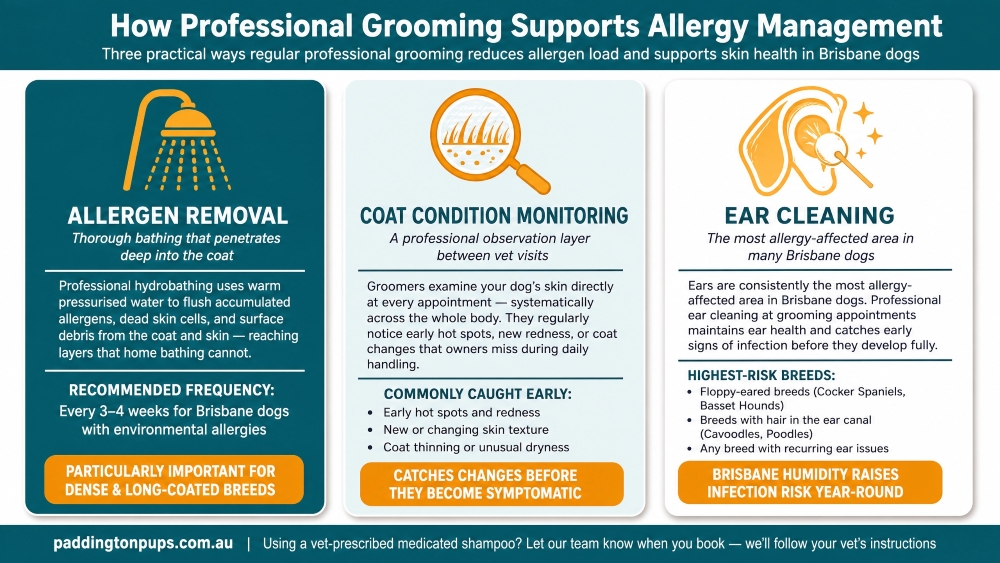
Allergen removal through thorough bathing. Professional hydrobathing at Paddington Pups uses warm pressurised water to penetrate deep into the coat, flushing accumulated allergens, dead skin cells, and surface debris from the coat and skin. For Brisbane dogs with environmental allergies, this level of coat penetration is difficult to achieve at home, particularly for dense or long-coated breeds. A thorough professional bath every three to four weeks significantly reduces the allergen load that accumulates between appointments.
Coat condition monitoring. Our groomers see your dog’s skin directly at every appointment, not through a coat of hair, but against the skin, systematically across the whole body. Groomers regularly notice early hot spots, new redness, or coat changes that owners miss during daily handling. For allergic dogs, this routine observation provides a professional monitoring layer between vet visits.
Ear cleaning. Ears are consistently the most allergy-affected area in many Brisbane dogs. Professional ear cleaning at grooming appointments, particularly for breeds with floppy ears or hair in the ear canal, maintains ear health and catches early signs of infection before they develop fully.
If your dog has a vet-prescribed medicated shampoo for their skin condition, let our team know when you book. Our groomers are happy to use your vet’s prescribed formula during the appointment and follow any specific instructions for application and contact time.
How Does Daycare Affect Allergic Dogs?
Doggy daycare has both potential benefits and considerations for dogs with allergies, and it is worth thinking through both.
Positive effects. Dogs that attend daycare at Paddington Pups have consistent access to our vet-grade sterilised facility, which significantly reduces exposure to outdoor environmental allergens compared to spending the day in a backyard. The indoor, climate-controlled environment provides a respite from pollen, mould, and grass seeds. Additionally, the mental stimulation and social interaction can help distract dogs from mild itchiness that might otherwise lead to obsessive licking at home.
Considerations. If your dog has a severe contact allergy to specific cleaning products, or a highly sensitive food allergy, communication is key. The Paddington Pups team is experienced in managing dogs with specific requirements. We ensure that dogs with food allergies are only given approved treats (or treats you provide) and are monitored to prevent them from accessing other dogs’ food.
Booking Your Dog’s Care at Paddington Pups
Managing a dog with allergies in Brisbane requires a team approach. Between your daily home routine, your vet’s medical guidance, and our professional grooming and daycare services, your dog can remain comfortable year-round.
If you are looking for a grooming team that understands the specific needs of allergic dogs, or a daycare environment that can accommodate dietary restrictions, contact our team today. For new customers, we offer comprehensive consultations to understand your dog’s specific allergy profile before their first visit.