
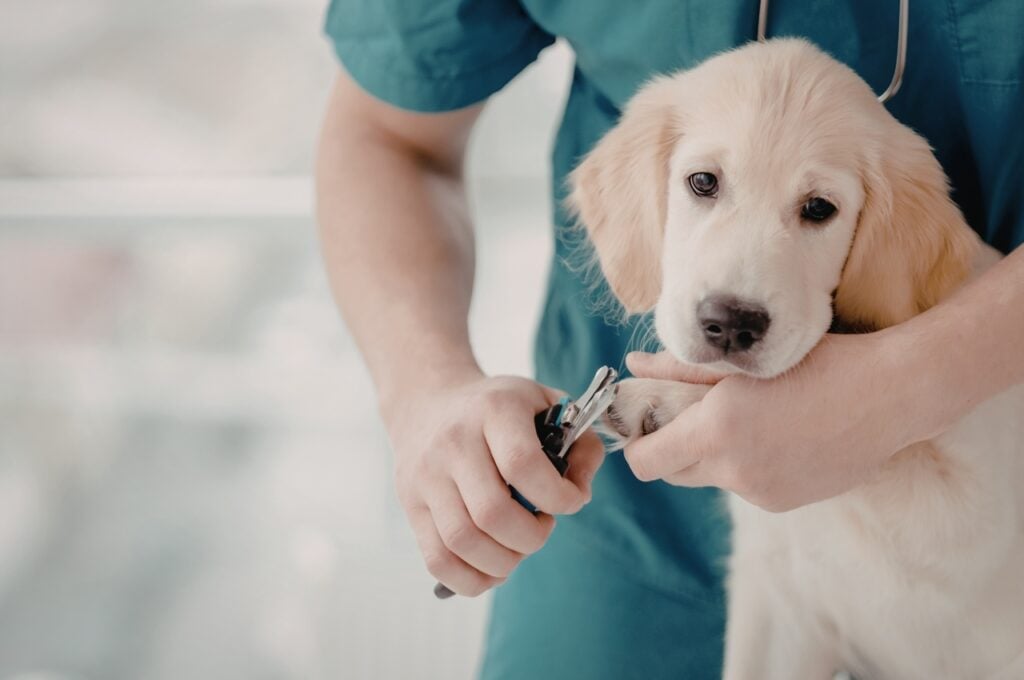
Watching your dog pull away the moment you reach for the nail clippers isn’t just frustrating—it’s heartbreaking. You know regular nail care is important, but the anxiety and the fear of accidentally hurting them can make every session feel like a battle. Whether you’ve previously cut too close to the quick or your dog had a negative grooming experience, nail trimming doesn’t have to be this stressful.
With the right approach, proper tools, and an understanding of canine anxiety, you can transform this dreaded task into a calm, manageable routine. For Brisbane dog owners enjoying Queensland’s active outdoor lifestyle, maintaining proper nail length is essential for your dog’s comfort and mobility.
At Paddington Pups, we’ve spent over 15 years helping Brisbane dogs become comfortable with nail care through our professional grooming services. This guide covers everything you need for stress-free nail trimming, from understanding why it matters to knowing when professional help is the best choice.
Why Is Regular Dog Nail Care Essential for Your Pet’s Health?
Regular nail trimming is fundamental preventative healthcare that protects your dog’s comfort, mobility, and long-term joint health. Research from the Royal Veterinary College (RVC) found that overgrown nails were the fourth most frequently diagnosed disorder in dogs under primary veterinary care in the UK, affecting 5.64% of all dogs annually. The study emphasised that overgrown nails cause discomfort, mobility issues, and may eventually ingrow into pads, causing pain and infection.
What Problems Does Nail Overgrowth Cause?
When nails extend beyond the paw pads, they fundamentally alter how your dog moves:
- Posture and Gait Changes: Overgrown nails force dogs to adjust their natural stance. The toes splay outward, weight distribution shifts unnaturally, and the altered gait places excessive stress on joints throughout the body, from the paws up to the spine.
- Joint Stress and Arthritis: While direct causation is complex, veterinary professionals agree that long-term postural changes from overgrown nails can contribute to joint wear and exacerbate conditions like arthritis, particularly in older dogs or breeds predisposed to joint issues.
- Pain and Mobility Issues: Long nails make walking uncomfortable. Dogs may become reluctant to exercise, show signs of limping, or display irritability. In Brisbane’s active environment, proper nail length is essential for comfortable movement on hard surfaces.
- Injury and Infection Risk: Overgrown nails are prone to splitting, cracking, or tearing. These injuries expose the quick (the blood vessel and nerve inside the nail), causing pain and creating entry points for bacterial infection.
How Often Should Brisbane Dogs Have Their Nails Trimmed?
Trimming frequency depends on your dog’s activity, the surfaces they walk on, and their individual nail growth rate:
- Active dogs (daily walks on hard surfaces): Every 4-6 weeks
- Moderately active dogs: Every 3-4 weeks
- Less active or indoor dogs: Every 2-3 weeks
- Senior dogs with reduced activity: Every 2-3 weeks
What Are the Signs of Healthy Dog Nails?
Knowing what healthy nails look like helps you identify when trimming is needed.
- Proper Length: When your dog stands on a flat surface, their nails should not touch the ground.
- Sound Test: If you hear distinct clicking sounds when your dog walks on hard floors, their nails are too long.
- Healthy Condition: Nails should be smooth and intact, free from cracks or splits. The surrounding skin should show no redness or swelling.
- Dewclaws: Don’t forget the dewclaws (the “thumb” on the inner side of the leg). These never touch the ground and are prone to overgrowth.
How Can You Trim Your Dog’s Nails Without Causing Stress or Injury?
Successful nail trimming combines the right tools, proper technique, and calm handling.
- Gradual Desensitisation: Spend several days getting your dog comfortable with paw handling. Start by briefly touching their paws while giving treats, then gradually increase the duration. Introduce the clippers by letting them see and sniff them, rewarding calmness, before ever attempting a trim.
- Choose the Right Environment: Select a quiet, familiar location with good lighting. Use high-value rewards like xylitol-free peanut butter on a lick mat to create a positive distraction.
- Work at Your Dog’s Pace: If your dog shows stress signals (panting, lip licking, pulling away), stop immediately. Forcing them will only create negative associations.
- Keep Sessions Short: Trim just one or two nails per session. Multiple short, positive experiences are better than one long, stressful one.
Step-by-Step Guide to Safe Nail Clipping
- Position Your Dog Comfortably: Place small dogs on a non-slip surface at table height. Have larger dogs lie on their side. Support each paw gently but firmly.
- Identify the Quick: On white nails, the pink quick is visible; trim 2-3mm away from it. On black nails, trim small slivers at a time. As you get closer to the quick, you’ll see a small, dark circle appear in the center of the nail’s cut surface—stop when you see this.
- Position Clippers Correctly: Hold clippers at a slight angle, matching the nail’s natural curve. Cut from underneath in a smooth, confident motion.
- Smooth Rough Edges: Use a nail file to smooth any sharp edges, which prevents scratching and snagging.
If Bleeding Occurs: Don’t panic. Apply styptic powder or cornflour to the nail tip with firm pressure for 1-2 minutes. The bleeding should stop within 5-10 minutes.
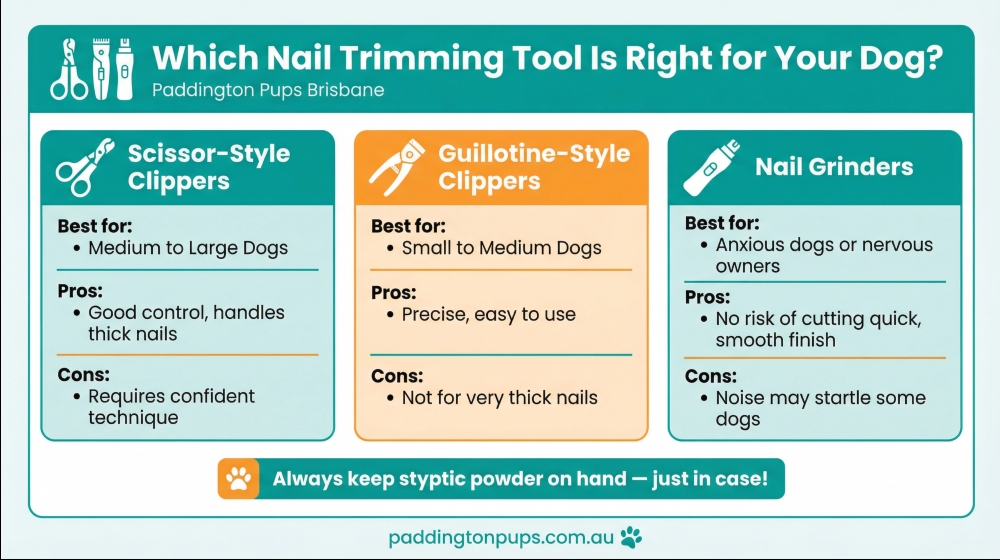
Which Tools Are Best for Safe Nail Trimming?
The right equipment makes the process significantly easier and safer.
- Scissor-Style Clippers: Best for medium to large dogs. They offer good control and can handle thicker nails.
- Guillotine-Style Clippers: Ideal for small to medium dogs. They are precise but not suitable for very thick nails.
- Nail Grinders: An excellent option for dogs anxious about clippers or for owners nervous about cutting the quick. They gradually file the nail down, offering great control.
Always have styptic powder on hand as a safety measure.
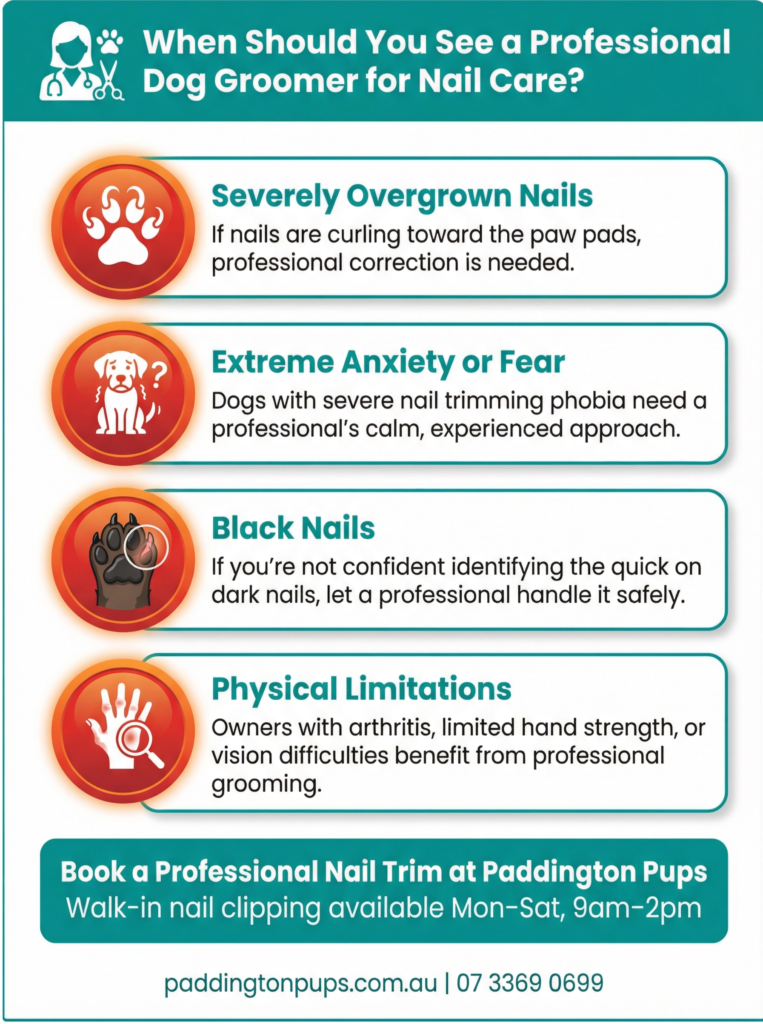
When to Seek Professional Dog Grooming in Brisbane
Sometimes, professional help is the safest and most effective option.
Indicators That Professional Help Is Needed:
- Severely Overgrown Nails: If nails are curling into the paw pads, a professional can correct them safely.
- Extreme Anxiety or Fear: For dogs with severe nail trimming phobia, a professional groomer’s experience is invaluable.
- Black Nails: If you are not confident identifying the quick on dark nails, a groomer can do so safely.
- Physical Limitations: Owners with arthritis, limited hand strength, or vision difficulties may find professional grooming more practical.
At Paddington Pups, our experienced groomers use gentle handling techniques and work efficiently to minimise stress. Many owners find it convenient to combine nail care with our doggy daycare or other grooming services.
Give Your Brisbane Dog the Nail Care They Deserve
Transforming nail trimming from a dreaded battle into a calm, manageable routine is entirely possible when you have the right knowledge, tools, and approach. Whether you choose to handle nail care at home through patient desensitisation, trust professional groomers with the expertise to work efficiently, or combine both approaches for optimal results, the most important factor is consistency.
Regular nail maintenance—whatever method works best for your dog’s temperament and your confidence level—prevents the overgrowth, discomfort, and joint stress that compromise your dog’s mobility and quality of life. For Brisbane dogs enjoying Queensland’s year-round outdoor lifestyle, proper nail care isn’t optional—it’s essential preventative health care that protects every step they take.
At Paddington Pups, we understand that nail trimming anxiety affects both dogs and their owners. Our experienced groomers work calmly and efficiently, creating positive experiences that make future nail care easier for everyone involved.
Ready to give your dog professional nail care in a calm, familiar environment? Contact us at 07 3369 0699 or Info@PaddingtonPups.com.au to discuss your dog’s nail care needs. Our professional grooming services can be combined with doggy daycare for a complete care experience your dog will actually enjoy—because when paws are healthy and comfortable, every Brisbane adventure becomes more enjoyable.
FAQs
How often should I trim my dog's nails?
Every 3-4 weeks is a good average. If you hear their nails clicking on the floor, it’s time for a trim.
What should I do if I accidentally cut the quick?
Apply styptic powder or cornflour with firm pressure for a minute or two. The bleeding should stop quickly.
Can I use human nail clippers on my dog?
No. They can crush the nail and cause pain. Always use clippers designed for dogs.
My dog is terrified of nail trimming. What should I do?
Start with gradual desensitisation, rewarding calm behaviour around the clippers. If the fear is severe, our professional groomers at Paddington Pups can help.
Should I trim dewclaws?
Yes. They don’t wear down naturally and can grow into the paw pad, causing pain and infection.