Small Dog Grooming and Daycare: A Brisbane Guide for Toy Breeds

A Chihuahua, Pomeranian, Maltese, toy Poodle, and Cavoodle may all be called small dogs, but their daily care can look completely different. One may need a quick, gentle brush and routine health checks, while another needs regular line brushing, drying after wet weather, and a consistent professional grooming schedule to stay comfortable.
 
For busy Brisbane owners, a good routine also includes more than coat care. Some small dogs thrive with a carefully considered daycare routine that provides supervised play, social contact, and a change of environment. Others prefer quieter activities or are not ready for group care. This article explains how to make both grooming and daycare decisions around your individual dog’s coat, confidence, and wellbeing.
 

Why Does Small Dog Grooming Need an Individual Plan?

Small dogs are often mistakenly treated as though they all need the same care because they share a similar body size. In practice, coat type, skin sensitivity, lifestyle, and tolerance for handling are much more important than the number on the scale.
 
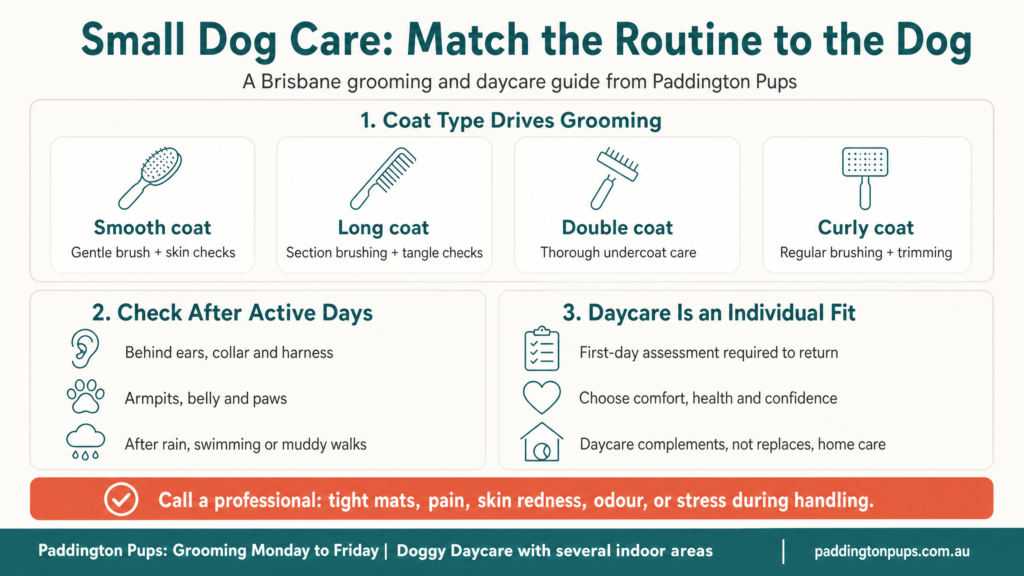
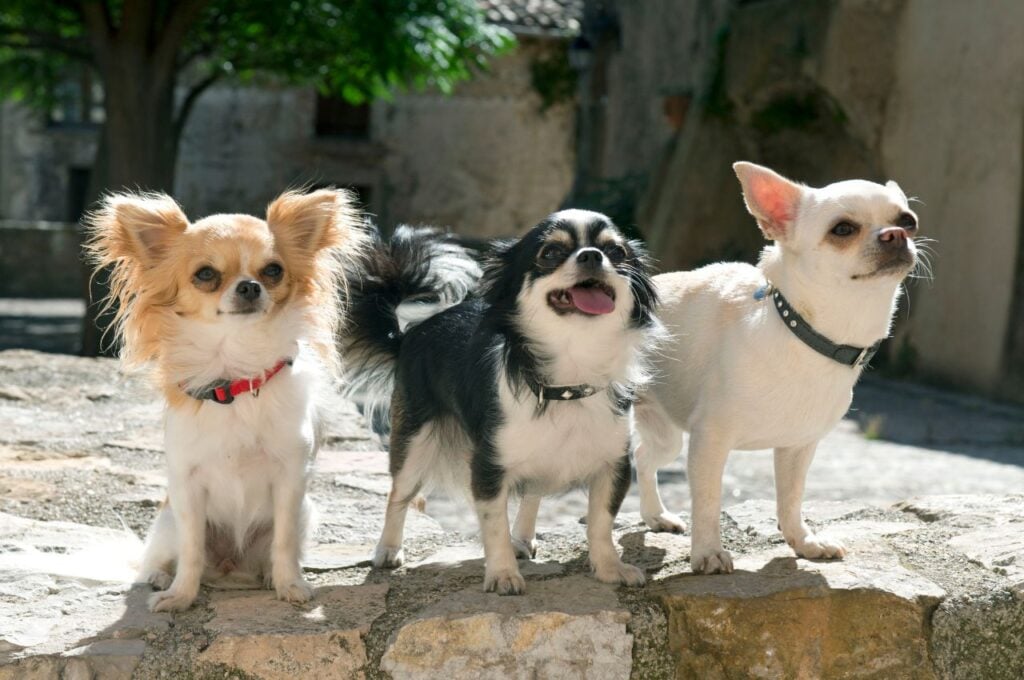
A short-coated Chihuahua may need simple, regular brushing to remove loose hair and provide a chance to check the skin, ears, and nails. A long-coated Chihuahua or Pomeranian has more hair in areas that rub, such as behind the ears, under the collar, and around the legs. A toy Poodle or poodle cross often has a curly coat that can form close-to-skin knots if it is not brushed in sections and maintained with suitable trimming.
 
The confirms that grooming tools and frequency should match the coat. It recommends longer bristles and wide-tooth combs for long-haired dogs, and softer or short-bristle tools for short-haired coats .
 

How Do Different Small-Dog Coats Change the Grooming Routine?

This table is a starting point rather than a substitute for tailored grooming advice. Coat condition, weather, swimming, outdoor activity, and skin health can all change what your dog needs week to week.
 
Small-dog coat profile
Examples
Practical home focus
When professional grooming is especially useful
Short, smooth coat
Smooth-coated Chihuahua, Miniature Pinscher
Gentle brushing, skin and parasite checks, nail and ear care
When nails, shedding, bathing, or handling confidence need support
Long, silky coat
Long-coated Chihuahua, Maltese, Yorkshire Terrier
Check friction zones, brush gently in sections, remove debris after walks
For a tidy trim, persistent tangles, and consistent coat maintenance
Dense double coat
Pomeranian, small Spitz-type dogs
Thoroughly check the undercoat and high-friction areas; avoid only brushing the surface
For a professional bath, dry, blow-out, and coat-care plan
Curly or wool-type coat
Toy Poodle, many poodle crosses
Brush in sections to reduce close-to-skin tangles; keep handling sessions positive
For regular clipping, safe knot removal, and a manageable maintenance length
Regular grooming is a health-maintenance activity, not simply a cosmetic one. A 2022 peer-reviewed study of grooming-related concerns in ASPCA programs found that 77% of dogs receiving medical grooming at its animal hospital were classified as long-haired breed types . That is not a prevalence figure for all dogs, but it does underline why longer, denser coats deserve early and consistent attention.
 

What Should Brisbane Owners Check Between Grooming Appointments?

Brisbane’s humidity, summer storms, muddy parks, and water play can add to the normal friction of a collar, harness, or coat. A two-minute check after wet or active days can prevent a small tangle from becoming a difficult mat.
 
Area to check
Why small dogs can need extra attention
What you are looking for
Behind the ears
Fine hair rubs and tangles easily here
Small knots, damp hair, scratching, or sensitivity
Under the collar or harness
Constant contact creates friction
Flattened hair, tangles, rubbing, or skin irritation
Armpits, belly, and groin
These areas are easy to miss and can stay damp
Tangles, debris, redness, or discomfort when touched
Paws and leg feathering
Mud, grass seeds, and moisture collect low to the ground
Clumps, stuck debris, and hair between paw pads
Eyes, ears, and mouth area
Fine facial hair can hold dirt or moisture
Tear staining, odour, discharge, or hair touching the eyes
If you find a small, loose tangle, work slowly and stop before your dog becomes uncomfortable. If it is tight, close to the skin, wet, smelly, painful, or difficult to see through, arrange professional help rather than attempting to cut it out at home. The RSPCA advises that difficult or skin-adjacent matting is safest handled by a trusted groomer or veterinary professional .
 
A scheduled gives your dog’s coat a consistent reset. Paddington Pups states that its qualified dog groomers are available Monday to Friday, with grooming time varying according to the dog’s size, behaviour, coat length, and coat condition.
 

How Can You Make Grooming Less Stressful for a Small Dog?
Many small dogs are physically easy to lift, but that does not mean they are automatically comfortable with being restrained, brushed, bathed, or dried. The best grooming plans protect your dog’s confidence as well as their coat.
 
Start with very short handling sessions in a calm place. Let your dog see and sniff the brush, touch one easy area, then reward them and finish while they are still relaxed. Gradually build tolerance around the feet, ears, belly, and tail. The RSPCA recommends starting with the areas the dog enjoys and stopping before any discomfort or agitation appears.
 
Avoid holding your dog tightly in place, pulling a comb through knots, or turning every brush session into a long ordeal. If your dog is showing fear, pain, sudden sensitivity, or attempts to escape handling, speak with your vet. Painful ears, dental issues, skin disease, joint discomfort, or a past stressful experience can make grooming harder than it should be.
 
For dogs that need regular bathing, can form part of a broader coat-care plan. It should sit alongside appropriate drying and brushing, not replace them.

Can Small Dogs Benefit from Daycare?

Yes, some small dogs can benefit from daycare, but size alone is not the deciding factor. A good fit depends on whether the dog is healthy, comfortable in a group environment, able to cope with the noise and activity, and suited to the facility’s assessment process.
 
Paddington Pups provides a large indoor daycare space with several different areas for dogs to socialise, exercise, and play. The business offers without bookings, but new dogs must pass a first-day assessment to return . That assessment matters. It gives the team and owner a chance to see whether the environment is appropriate for the individual dog, rather than assuming a Chihuahua, Pomeranian, or other toy breed will enjoy daycare simply because they are small.
 
can be useful for a social, confident small dog who spends long periods alone at home or needs a more varied daytime routine. It offers supervised interaction and activity that can complement the calm routines, walks, training, and rest your dog has at home. It is not a treatment for anxiety, reactivity, or a dog that is overwhelmed in group settings. Those concerns need individual guidance from a veterinarian or appropriately qualified behaviour professional.
 

How Can Grooming and Daycare Work Together?

For some dogs, combining grooming with a familiar daytime routine can make practical sense. Paddington Pups notes that dogs booked for grooming may be able to in daycare after their appointment, with extra charges potentially applying. Owners should confirm the current options, eligibility, and collection arrangements directly with the team before booking.
 
Your goal
A practical approach
Keep a long coat manageable
Set a grooming interval with your groomer, then maintain it with short home brushing sessions between appointments.
Reduce damp-coat tangles after active days
Check and dry the coat after water play, rain, or baths, then book grooming support if knots develop.
Give a social small dog a varied weekday routine
Discuss first-day assessment and daycare suitability with Paddington Pups, then begin gradually if the setting is a good fit.
Make appointment days easier to plan
Ask whether Stay and Play is available after your grooming appointment and check current conditions and charges.
The right balance is individual. Some small dogs enjoy a mix of grooming care, selected daycare days, training, and quiet home time. Others may be happiest with grooming-only visits and a low-key daily routine. Neither option is better in every case.
 

When Is Daycare Not the Right Choice for a Small Dog?

Daycare may not be right if your dog becomes very distressed around unfamiliar dogs or people, has contagious illness, is recovering from surgery, has unmanaged pain, or is overwhelmed by busy settings. Dogs who are particularly fearful, reactive, or uncomfortable in group care need a more individual plan.
 
Before attending, review the current , first-day assessment process, vaccination requirements, and desexing policy. The live Paddington Pups policy states that dogs aged six months and over must be desexed to attend, with limited approval-based exceptions for certain dogs between six and 12 months. Requirements can change, so confirm your dog’s eligibility directly before visiting.
 

What Small-Dog Grooming Mistakes Should You Avoid?

The most common problems come from trying to make grooming quicker rather than more comfortable.
 
  • Assuming a small dog needs little grooming: A compact body can still carry a high-maintenance coat. Check the coat type rather than judging by size.
  • Brushing only the outer layer: Surface hair can look smooth while knots form underneath. Work in gentle sections.
  • Using scissors on tight mats: Skin can be drawn into the mat. Arrange professional help instead.
  • Skipping checks after swimming or rain: Damp, fine, curly, or dense hair can tangle quickly in Brisbane conditions.
  • Assuming all small dogs will enjoy daycare: Individual confidence and a successful first-day assessment matter more than breed label or size.

How Can You Build a Better Routine for Your Small Dog?

The strongest routine is simple enough to repeat. Check high-friction coat areas after active days, make brushing brief and rewarding, and do not wait for severe matting before booking help. When your small dog is comfortable with a busy, social environment, a well-planned daycare routine can add variety and supervised activity to the week.
 
Paddington Pups can support both parts of that plan through and daycare for suitable dogs. To discuss your dog’s coat, appointment needs, or daycare suitability, or visit the before your first visit.

FAQs

How often should I groom a Chihuahua or Pomeranian?

The right frequency depends on coat type, activity, weather, and whether your dog is developing tangles. Smooth-coated Chihuahuas generally need a lighter routine than long-coated Chihuahuas or Pomeranians. Ask your groomer to recommend a practical schedule based on your dog’s individual coat condition.

Some do, especially dogs with curly, long, or dense coats. Home brushing is still important between appointments, but professional grooming can help maintain a comfortable trim, clean and dry the coat thoroughly, and manage knots before they become severe.

Do not assume shaving is the best answer. Pomeranians have dense double coats, and clipping decisions should be made with a groomer or veterinarian who can assess the coat, skin, heat management needs, and the risks of altering the coat. Regular brushing, appropriate bathing and drying, shade, and safe exercise timing are usually more reliable first steps.

Do not make the decision based on breed or size alone. Your dog’s comfort, health, behaviour, and first-day assessment determine whether daycare is suitable. Contact Paddington Pups to confirm the current process and discuss your individual dog’s needs.

Paddington Pups states that dogs may be able to Stay and Play in daycare after grooming, with extra charges potentially applying. Confirm current availability, eligibility, and collection arrangements directly with the team when you book.
Scroll to Top