A puppy can go from full-speed zoomies to fast asleep in what feels like seconds. If you are wondering whether your new pup is sleeping too much, not enough or at all the wrong times, you are not alone. Puppy sleep can be one of the most confusing parts of those early weeks, especially when you are trying to balance toilet training, socialisation, family life and work.
At Paddington Pups, we see how much our dogs take in each day. Play, new sounds, people, training moments and social experiences can all be exciting. They can also be tiring. For a growing puppy, a good day is not one packed from morning to night. It is a day with the right mix of positive activity, calm downtime and proper sleep.
How Much Sleep Do Puppies Need?
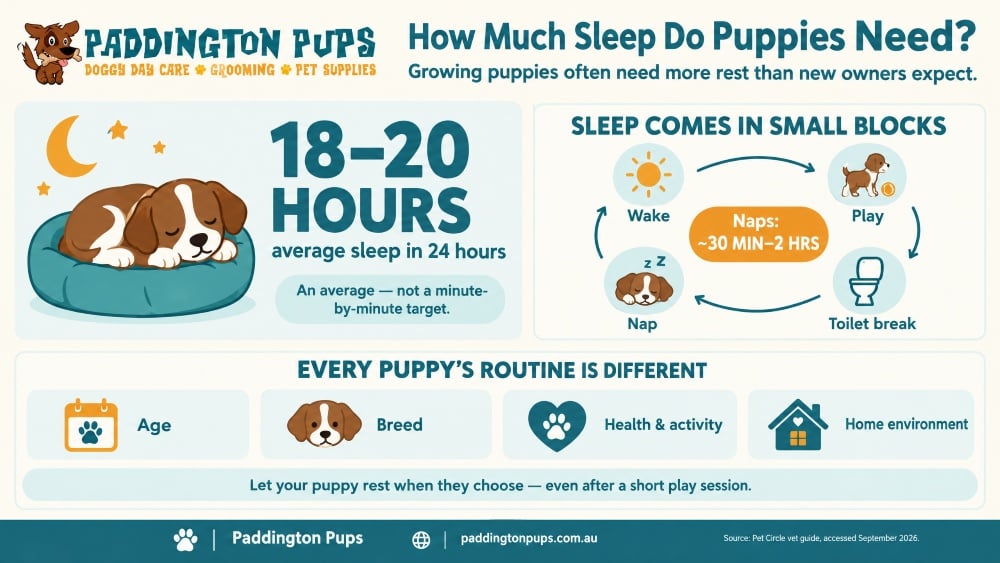
Most growing puppies need far more rest than new owners expect. An Australian veterinarian-authored guide from Pet Circle puts the average at about 18 to 20 hours of sleep in a 24-hour period. That total includes overnight sleep and the many naps that appear throughout the day.
This is an average, not a target you need to track minute by minute. Your puppy’s age, breed, health, activity level and home environment all influence their routine. One puppy may sleep deeply after breakfast, while another might have a short burst of play, a toilet break and then fall asleep again.
Puppy sleep often comes in small blocks. Naps can last from roughly 30 minutes to two hours, so it is completely normal for a puppy to wake, explore, play for a little while and then nod off again. Rather than trying to keep them awake for a family visit or an extra game, give them the chance to rest when they choose to.
Why Is Puppy Sleep So Important?
Sleep gives your puppy time to recover from the work of growing and learning. A young dog is processing a huge number of new experiences every day: household sounds, new people, lead walks, car rides, handling, training and other dogs. Rest is what helps keep that big world manageable.
A well-rested puppy is often better able to engage with you calmly. That does not mean every tired puppy will be quiet or every lively puppy is under-rested. Puppies are individuals. It does mean that a puppy who has had a busy day needs genuine quiet time afterwards, just as they need meals, toilet breaks and gentle play.
RSPCA Australia includes a safe living space, a comfortable sleeping area, socialisation, play, exercise and training among the essential parts of puppy care. These needs work together. Activity is important, but it should be balanced with a chance to switch off.
What Does Healthy Puppy Sleep Look Like?
Healthy puppy sleep is usually a mix of longer overnight rest and daytime naps. Your puppy may twitch their paws, make little noises or change positions as they sleep. They may also wake up briefly, take a drink or toilet, then settle again.
What matters most is the bigger picture. Look for a puppy who has periods of relaxed sleep, wakes up normally, shows interest in food and family life, and is generally themselves between naps. A predictable routine makes those patterns easier to notice.
How Can You Create a Better Sleep Routine at Home?
Start by giving your puppy a sleep space that feels comfortable and predictable. RSPCA Australia recommends an easily accessible sleeping area with soft bedding that is cosy, dry and not too hot or cold. In Brisbane, that also means thinking about airflow, heat and where afternoon sun lands in your home.
Choose a calm spot that is close enough for your puppy to feel secure, but not in the middle of constant foot traffic. If you use a crate or a puppy pen, introduce it gradually and positively. The space should never feel like a punishment. It should be a place where your puppy can settle with a safe chew, a familiar bed or simply some peace and quiet.
A simple routine can help:
- Offer a toilet break after your puppy wakes, eats, plays or has a training session.
- Keep new experiences short and positive, then allow a quiet reset afterwards.
- Avoid waking a settled puppy just because it is time for another activity.
- Keep evenings calmer where possible, especially before bedtime.
- Use the same sleep area and a similar bedtime routine each night.
RSPCA Australia recommends keeping socialisation sessions short and positive, introducing only one or two new things at a time and allowing your puppy the choice to investigate or move away. That approach leaves room for the rest your puppy needs to recover from learning.
What Are the Signs Your Puppy Might Need a Break?
A puppy does not always make their need for sleep obvious. Some will curl up and snooze. Others seem to get louder, mouthier or more frantic when they are overtired. You may notice that your puppy has trouble settling after an exciting outing, becomes less responsive to simple cues or starts bouncing from one activity to the next.
Those moments are a useful cue to lower the pace. Take your puppy to their toilet spot, offer a drink if appropriate, then guide the household towards quiet time. A calm room, lower voices and fewer demands can make it easier for them to switch off.
Do not assume that every change in puppy sleep is behavioural. Speak with your veterinarian if your puppy has a sudden change in sleep patterns, seems unusually lethargic, cannot settle, snores loudly or has laboured breathing. Your vet is the right person to rule out a medical concern and advise on what is normal for your individual puppy.
How Can Daycare Fit into a Puppy’s Rest Routine?
Daycare can be a wonderful part of a puppy’s wider social world when it is the right fit for the dog and is balanced with plenty of recovery time at home. At Paddington Pups, our Doggy Daycare is a walk-in service that gives dogs a safe, clean place to socialise, exercise and play. Each dog needs to pass a first-day assessment before returning.
For a young puppy, the aim should never be to fill every day with stimulation. A social day may be a lot to take in, even when it is enjoyable. Plan for a quieter evening afterwards, give your puppy the opportunity to sleep in their usual spot and keep the next day’s routine flexible if they need more rest.
Daycare is not a substitute for puppy sleep. It is one possible activity within a balanced week. Before you begin, talk with the Paddington Pups team about your puppy’s age, vaccination status, confidence, routine and individual needs. The first-day assessment is an important part of determining whether a dog can return for Daycare.
How Can Playcare Fit into a Puppy’s Learning and Rest Balance?
For dogs who are ready for it, Playcare™ is Paddington Pups’ specialised small-group programme. The published service information describes high-interaction games, puzzles, exercises, arts and crafts, plus physical, sensory, educational, cognitive and quiet stimulation. Activities are tailored to the dogs attending and their individual needs, preferences and goals.
That variety is exactly why recovery time matters. A puppy or young dog may enjoy a stimulating experience and still need an early night or a quieter day afterwards. Keep observing your dog rather than assuming they will cope with the same schedule every week.
Playcare is not designed to replace the quiet, familiar sleep your puppy needs at home. Think of it as an enrichment option to discuss with the team once your dog is ready, alongside a home routine that protects sleep, toilet time, gentle movement and connection with you.
How Can You Balance Socialisation, Play and Rest?
The best puppy routines are not about doing more. They are about choosing the right experiences and leaving enough room for rest. Positive socialisation helps puppies learn about the world, but RSPCA Australia stresses that these experiences should be safe, short and not overwhelming.
A practical way to plan the week is to alternate busier moments with quieter ones. A new café visit, a short training class, Daycare or Playcare may be followed by a peaceful afternoon at home. A family gathering may mean your puppy needs access to a quiet room. This kind of balance can make the early months feel calmer for everyone.
When you meet new people or bring your puppy into a new environment, pay attention to their body language. Let them move away if they need to, and celebrate calm choices. Rest is not an interruption to socialisation. It is part of helping your puppy cope with it.
A sleepy puppy is usually doing exactly what growing puppies do. By protecting their quiet time, keeping new experiences positive and choosing the right pace for their day, you are helping them build a calmer and more confident start to life. If you would like to explore whether Daycare or Playcare™ may suit your dog, the Paddington Pups team can help you begin with the right conversation.