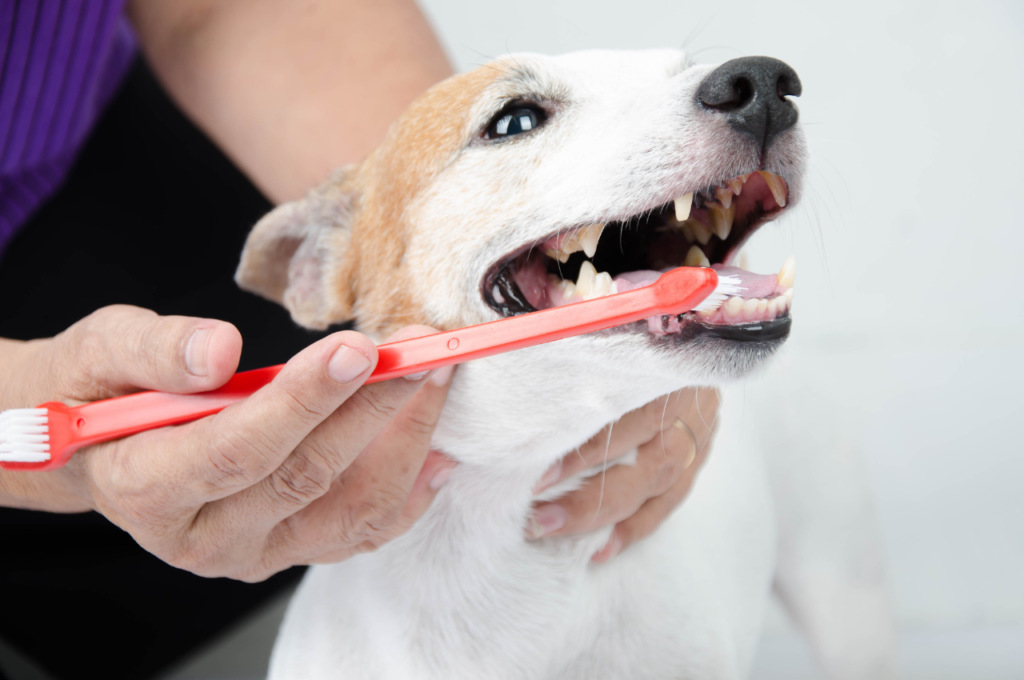
Does Paddington Pups Offer a Teeth-Clean Grooming Extra?
Why Do We Encourage Dog Owners to Make Teeth Brushing a Routine?
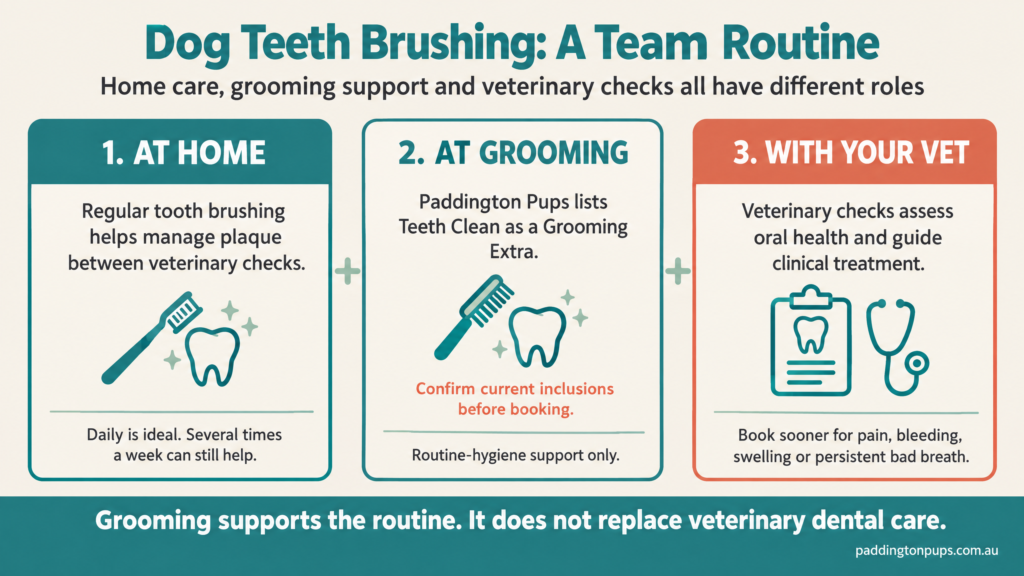
How Does Grooming Fit into Your Dog’s Dental-Care Routine?
Part of Your Dog’s Routine | What It Can Help With | What It Cannot Replace |
Home tooth brushing | Frequent plaque management, calm handling practice, and early awareness of changes in the mouth | Veterinary diagnosis or treatment |
Paddington Pups Teeth Clean extra | A grooming-supported hygiene routine and a useful reminder to keep dental care on your radar | A veterinary dental examination, dental x-rays, scaling below the gum line, or treatment for painful teeth and gums |
Veterinary dental check | Assessment of oral health and advice on the right next step | Regular plaque management at home |
Veterinary dental procedure | Clinical treatment where a veterinarian identifies a need | Your ongoing home routine after treatment |
Our grooming extra can be a useful part of that routine, particularly if it helps keep dental care on the list when you are booking grooming. However, we never want an owner to mistake a grooming service for clinical dental care. The Australian Veterinary Association explains that a complete dental examination and treatment cannot properly be performed while a dog is conscious
How Can You Make Teeth Brushing Easier at Home?
- Start with gentle touch. Briefly touch your dog’s cheek and lift their lip for a second or two, then reward calm behaviour.
- Let them taste the toothpaste. Offer a small amount of dog-safe toothpaste from your finger or the toothbrush.
- Brush only a few outer teeth. Keep the first sessions very short. The outer surfaces are the best place to begin.
- Build up slowly. Add more teeth only while your dog remains comfortable and relaxed.
- Finish on a positive note. Give your dog a reward and stop before the session becomes stressful.
How Often Should You Brush Your Dog’s Teeth?
| Where You Are Starting | A Practical Next Step |
| Puppy or dog new to brushing | Practise brief lip and muzzle handling several times a week, then introduce brushing gradually |
| Dog already comfortable with brushing | Aim for daily brushing, or several consistent sessions every week |
| Dog with a history of dental disease | Follow the home-care plan your veterinarian has recommended |
| Dog using our Teeth Clean grooming extra | Keep brushing at home. Our grooming extra supports the routine but does not replace it |
We also recommend asking your veterinarian to check your dog’s teeth and gums at least once a year. The AVMA recommends annual dental checks, with earlier assessment if you notice warning signs . Your veterinarian can tell you whether your dog needs additional care and what ongoing routine makes sense for their mouth.
When Do You Need a Vet Rather Than a Grooming Appointment?
Which Dental Products Are Worth Using?
How Can We Support a Better Everyday Routine for Your Dog?
FAQs
Is Teeth Clean included in every Paddington Pups grooming package?
Teeth Clean is listed under our Grooming Extras. Please ask our team about the current grooming options and inclusions when you book, as packages and availability can change.
How often should I brush my dog’s teeth?
Daily brushing is ideal, although several calm sessions each week can still be helpful. Start at a pace your dog can tolerate and build consistency over time.
Can a groomer remove tartar from my dog’s teeth?
A grooming appointment should not be relied on to remove tartar or treat disease below the gum line. If you see heavy tartar or notice bad breath, bleeding gums, mouth discomfort, or changes in eating, please arrange a veterinary dental check.
Do dental chews replace tooth brushing?
No. Chews can form part of a wider preventive plan, but regular brushing is still the most effective home measure for managing plaque between veterinary visits. Ask your veterinarian which products suit your dog.
What should I do if my dog will not let me brush their teeth?
Start again with brief, rewarded handling around the lips and muzzle. Never force the brush into your dog’s mouth. If the resistance is sudden, severe, or appears linked to pain, organise a veterinary check before continuing.