Golden Retrievers are one of the most popular breeds in Brisbane, and it is easy to see why. Friendly, intelligent, and endlessly keen to please, they slot into family life with very little fuss.
What is less often talked about is how much Queensland’s heat, humidity, and storm season actually change the day-to-day reality of owning one. A breed built with a dense double coat and a genuine love of activity needs a slightly different approach here than it might in a cooler climate. This guide covers what a Golden Retriever in Brisbane actually needs, from coat care through summer to exercise, health, grooming, and whether the breed suits inner-city living.
What Makes Golden Retrievers a Popular Choice for Brisbane Families?
Golden Retrievers are popular in Brisbane for the same reasons they are popular everywhere. They have a friendly, patient temperament, a genuine eagerness to learn, and a natural affinity for children and other pets. They are intelligent, trainable, and generally social with people and dogs alike. This makes them a comfortable fit for busy households, whether that is a family with young kids or a couple wanting an active companion for weekend adventures.
What makes the Brisbane context worth a closer look is the combination of traits that do not always sit easily with a subtropical climate. A dense, water-repellent double coat and a genuinely high activity drive are wonderful in a temperate climate, but they need real thought and planning once summer humidity sets in.
Understanding a Golden’s temperament also helps explain why the local adjustments matter so much. This is a breed that genuinely wants to be busy and involved, rather than one content to lounge indoors all day. That drive is part of the appeal, but it also means under-stimulation shows up quickly, particularly during the long stretches of the year when Brisbane’s heat limits outdoor time.
How Does Brisbane’s Climate Affect a Golden Retriever’s Double Coat?
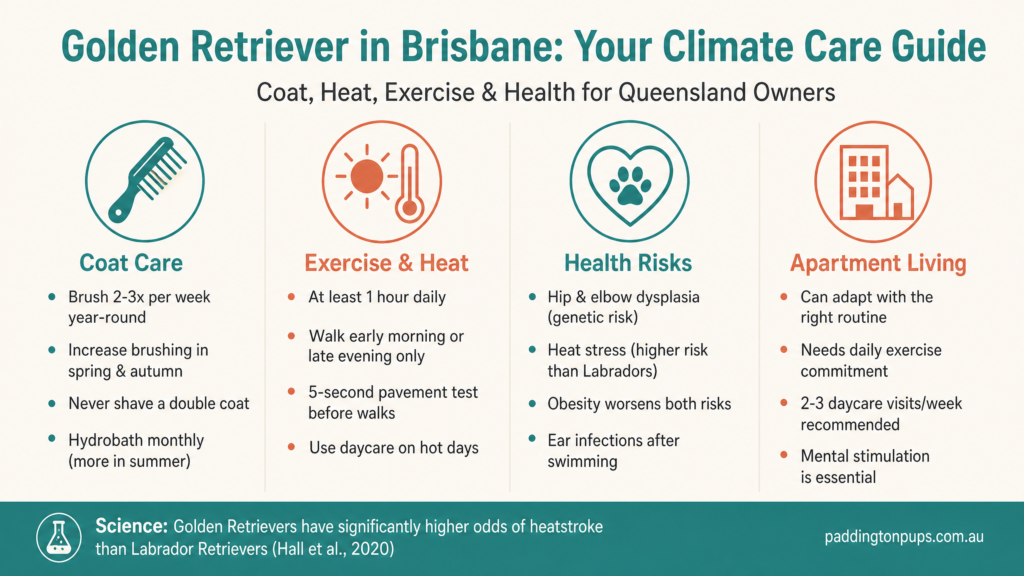
A Golden Retriever’s double coat consists of an insulating undercoat beneath a longer, water-repellent outer layer. This traps heat in exactly the conditions Brisbane summers deliver in abundance. That coat was built for cooler climates and cold water retrieving work, not for months of temperatures above 25 degrees and humidity regularly exceeding 70 percent.
The undercoat is the real issue here. Left to build up, it traps warm air against the skin and makes it harder for a Golden to regulate their temperature through panting alone. It is also worth knowing that shaving a double-coated breed to “help” with the heat is generally not the answer. The coat actually provides some insulation against heat as well as cold, and shaving can damage it permanently. Regular brushing to clear out the undercoat, rather than removing the coat altogether, is the better approach for Queensland conditions.
Humidity compounds the issue further. A damp undercoat that has not dried properly after a swim or a hydrobath can trap moisture against the skin for hours in Brisbane’s sticky air. This creates exactly the warm, damp conditions that hot spots and skin irritation thrive in. Thorough drying after any wash matters just as much as the wash itself for this breed.
How Much Exercise Does a Golden Retriever Need in Brisbane’s Heat?
A Golden Retriever needs at least an hour of exercise most days. In Brisbane’s climate, when and how that exercise happens matters just as much as how much. Early morning or evening walks avoid the worst of the heat. The five-second pavement test, holding the back of your hand on the footpath for five seconds, is a reliable way to check whether it is safe for paws before heading out.
The bigger challenge for many Brisbane owners is the stretch of the day when outdoor exercise simply is not safe, particularly through summer’s hottest hours. A high-energy, food-motivated breed left under-exercised during those windows can quickly become restless or start showing it in less welcome ways around the house.
This is where a climate-controlled setting like daycare becomes genuinely useful. It gives a Golden supervised play and exercise regardless of what is happening outside. Water play is worth factoring in too. Goldens were bred to retrieve from water, and many genuinely love swimming. This makes it a useful low-impact way to burn energy on days when a full walk is not practical. What Health Issues Should Brisbane Golden Retriever Owners Watch For?
Golden Retrievers are generally a healthy breed, but they are genetically predisposed to a handful of conditions worth knowing about.
Heat adds an extra layer of risk on top of these breed-specific conditions. A 2020 study in Scientific Reports investigating heat-related illness in UK dogs found that Golden Retrievers had significantly higher odds of heatstroke compared to Labrador Retrievers, and that dogs with a higher bodyweight relative to their breed mean were at even greater risk . Keeping a Golden at a healthy weight is one of the more straightforward things an owner can control, and it genuinely helps with both the breed’s joint risk and their ability to cope with Brisbane’s warmer months. What Grooming Schedule Suits a Golden Retriever in Queensland’s Climate?
A Golden Retriever in Brisbane generally benefits from brushing two to three times a week year-round, increasing during the heavier shedding periods in spring and autumn. This should sit alongside more frequent hydrobathing through summer.
Regular brushing prevents the undercoat from matting and building up heat. More frequent bathing through the warmer months helps manage the combination of humidity, activity, and outdoor exposure that Brisbane dogs deal with for most of the year.
One of our clients at Paddington Pups had a Golden who developed hot, matted patches under her coat every summer despite fairly regular home brushing. Moving to a more frequent professional grooming and hydrobathing schedule through the warmer months made a noticeable difference. A proper wash and blow-dry clears the undercoat far more thoroughly than brushing alone ever could.
Coat maintenance also makes a real difference to how comfortable a Golden is day to day, not just how they look. A coat free of matting and trapped undercoat allows air to actually reach the skin. This matters more in Brisbane’s humidity than most owners realise until they see the difference a proper groom makes. Regular grooming appointments also give a second set of trained eyes on your dog’s skin and coat condition, which can catch early signs of irritation before they become a bigger issue. You can read more about cutting your dog’s grooming time in half in our dedicated guide.
Is a Golden Retriever a Good Fit for Brisbane Apartment or Inner-City Living?
A Golden Retriever can adapt to apartment or inner-city living in Brisbane, but only with a genuine commitment to daily exercise and mental stimulation. This is a breed that struggles more than most with being under-stimulated in a small space. Their size and energy level mean they do best with reliable access to a yard, a nearby park, or a consistent daycare routine to make up the difference.
For Paddington and inner-city Brisbane owners without much outdoor space at home, a few daycare visits a week can genuinely change how a Golden copes with apartment living. It gives them the exercise and social interaction their temperament actually needs, in an environment that is already set up for Brisbane’s climate rather than working against it.
It is worth being honest about this before bringing a Golden into a smaller home. A dog left alone in an apartment for long stretches, with limited opportunity to burn energy, is far more likely to develop restlessness or destructive habits than the same dog in a routine that includes regular exercise and daycare. The breed itself is not the obstacle; the plan around it is what makes the difference.
Bringing It All Together
Golden Retrievers thrive in Brisbane households that plan around the climate rather than ignoring it. Coat care, exercise timing, and a bit of extra vigilance around heat all play a part. Get the coat care and exercise routine right, stay on top of the breed’s known health risks with your vet, and a Golden Retriever settles into Queensland life just as happily as anywhere cooler.
None of this needs to be complicated or expensive, it just needs to be consistent. If you would like help managing the exercise, coat, or heat side of things, get in touch with Paddington Pups to see how our grooming and daycare services could fit your Golden’s routine.