How Do You Set Up for Success Before the First Meeting?
Why Do Separate Spaces Matter From Day One?
- Their own sleeping area, ideally in different rooms initially
- Separate feeding spots where they cannot see each other eating
- A retreat space they can access without crossing the other dog’s territory
- Their own toys, bedding, and water bowl
How Can You Use Scent to Start the Introduction?
What Are the Common Pre-Introduction Mistakes to Avoid?
- Do not bring the new dog home and immediately place them in the existing dog’s space without any preparation
- Do not use essential oils or aromatic products in the meeting area. Many, including lavender, can be irritating or harmful to dogs even at low concentrations
- Do not assume a dog-friendly existing dog will automatically be fine with any new dog. Friendliness toward familiar dogs does not guarantee comfort with a stranger entering their home territory
- Do not plan the first meeting for a day when you are rushed, tired, or distracted. Introductions go better when the handler is calm and attentive
How Should You Structure the First Meeting on Neutral Territory?
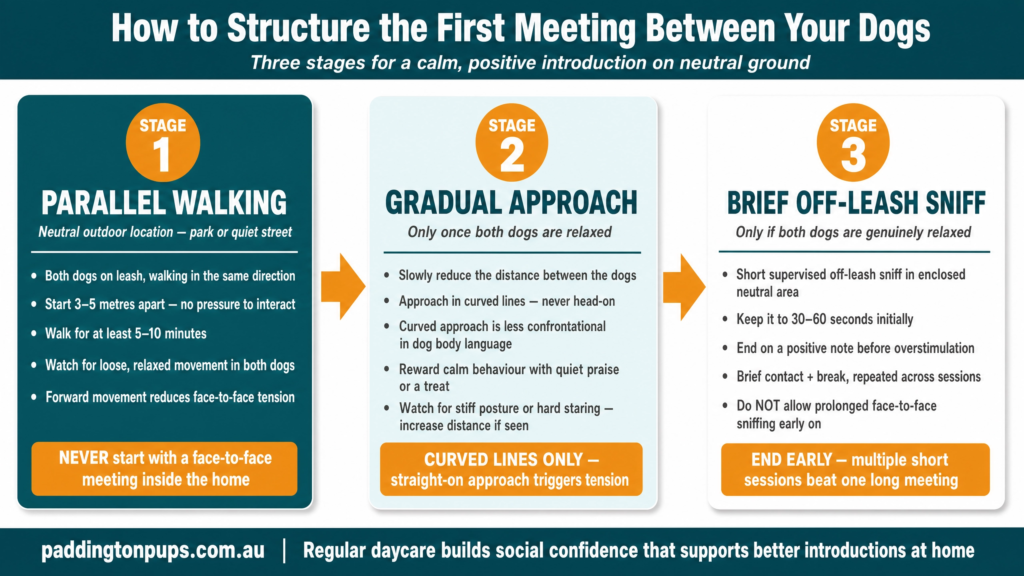
Where Should the First Meeting Happen?
What Are the Stages of a Structured First Meeting?
How Do You Read Body Language During Introductions?
What Are the Signs That the Introduction Is Going Well?
Body Language Signal | What It Looks Like | What It Means |
Loose movement | Wiggly, relaxed body posture | The dog is comfortable and not holding tension |
Soft eyes | Relaxed gaze without hard staring | The dog is not fixated or preparing for conflict |
Relaxed tail wag | Tail wagging in a relaxed arc, not stiff or high | Friendly, non-threatening arousal |
Mutual sniffing | Brief sniffs followed by disengagement | Appropriate, polite canine investigation |
Play bow | Front end lowered, back end up | An invitation to play and a signal of friendly intent |
What Are the Signs That One or Both Dogs Need More Space?
- Stiff, rigid body posture
- Hard, fixed stare at the other dog
- Hackles raised along the back
- Tail held very high and stiff
- Yawning, lip licking, or turning the head away repeatedly (these are calming signals, meaning the dog is trying to de-escalate)
- Ears pinned flat against the head
- Low, slow movement combined with forward focus
What Signals Require Immediate Intervention?
- Growling that does not stop when distance is increased
- Hard, unblinking stare combined with still posture
- Snapping or lunging
- One dog pinning or standing over the other without play context
- Any bite contact
How Do You Progress From Introduction to Cohabitation in the Days After?
How Should You Manage Separation on Days One to Three?
- Keep the dogs in separate areas of the house when unsupervised
- Feed in separate rooms or at opposite ends of a large space
- Allow brief, supervised interaction periods in neutral areas of the home
- Ensure each dog has access to their retreat space at all times
- Remove high-value resources, such as bones, favourite toys, or specific beds, from any shared space during this period to eliminate resource guarding triggers
How Do You Handle Supervised Shared Time on Days Three to Seven?
How Do You Build Positive Shared Experiences in the First Month?
- Feed both dogs at the same time with enough distance between them that neither feels pressured
- Take both dogs on walks together, using the parallel walking structure initially
- Engage in calm play sessions with both dogs present, rewarding each for calm behaviour
- Give each dog individual time with you daily. Jealousy over owner attention is a common source of tension in new multi-dog households
- How Do You Manage Common Challenges During Introductions?
What Should You Do About Resource Guarding?
- Feed all dogs separately and remove bowls when eating is finished
- Pick up high-value toys and bones when both dogs are in shared spaces until the relationship is established
- Ensure each dog has a resting place the other cannot access
- Avoid reaching in to take items from a guarding dog. Instead, trade for something the dog finds equally or more valuable
How Do You Handle One Dog Being Persistently Overwhelmed?
What If There Is Regression After Early Progress?
How Do Daycare and Socialisation Support the Introduction Process?
When Should You Seek Professional Help?
- Either dog has a history of aggression toward other dogs
- The introduction has resulted in a bite or injury
- One dog is showing sustained, severe anxiety that is not improving after two weeks
- Resource guarding has escalated to a level that is creating injury risk
- You are not confident reading body language signals accurately enough to manage the process safely
FAQs
Should I introduce my new dog to my existing dog at a dog park?
No. Dog parks are highly stimulating environments with many unpredictable variables. Introductions should happen in a quiet, neutral space where you can control the distance and pace without interference from other off-leash dogs.
How long does it take for two dogs to become friends?
The timeline varies widely. Some dogs settle within a few days, while others take several weeks or even months to fully relax around each other. The goal in the first month is peaceful coexistence, not immediate best friendship.
My resident dog is growling at the new puppy. Is this normal?
Yes, appropriate growling is a normal way for an adult dog to set boundaries with a boisterous puppy. However, you should monitor these interactions closely and intervene if the puppy ignores the warning or if the adult dog escalates beyond a warning growl.
Can I leave the dogs alone together while I go to work?
Not immediately. You should keep the dogs physically separated when unsupervised until they have demonstrated consistent, relaxed behaviour around each other for several weeks. Use baby gates, crates, or separate rooms to ensure safety.
Does attending doggy daycare help my dog accept a new sibling?
Yes, regular attendance at a structured daycare helps dogs develop better social skills, read body language more accurately, and become more adaptable to new dogs. It also provides a healthy outlet for energy, reducing tension at home.