Dog Digging: Understanding the Behaviour and Providing Better Outlets

A freshly dug hole beside the fence, a flower bed turned upside down, or soil scattered across the lawn can be frustrating. It is tempting to view dog digging as stubbornness or bad behaviour. In most cases, however, digging is a normal canine behaviour that is simply being directed to a place you would rather protect.
 
The most effective response is not to punish the hole after it appears. It is to work out why your dog is digging, protect the areas that matter, and provide safer outlets for their energy, senses, and natural interests. For some Brisbane dogs, regular can be a useful part of that plan, particularly when boredom or unused energy is contributing to the problem.

Why Do Dogs Dig?

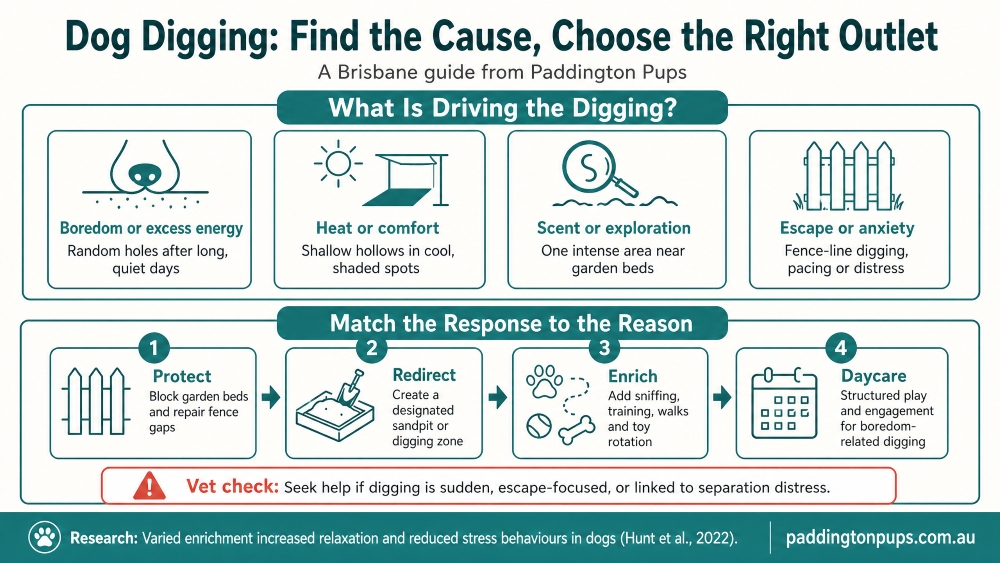
Dogs can dig for several different reasons. The notes that boredom, frustration, loneliness, anxiety, and pent-up energy can all increase the likelihood of digging. Digging may also be a normal opportunity to explore, investigate a scent, create a comfortable resting spot, or bury a valued item .
 
The pattern of the holes usually tells you more than the number of holes. A dog making shallow scrapes in a cool, shaded corner may be trying to get comfortable. A dog fixated on one patch of ground may be following a scent. A dog repeatedly excavating beneath a fence needs a different response again, because the priority is preventing escape and identifying what is motivating it.
 
Common motivation
What the digging often looks like
A helpful first response
Exploration or scent
One concentrated area, often near garden beds, roots, or small-animal activity
Restrict access to the area and provide a supervised alternative activity.
Boredom or excess energy
Random holes, especially after long periods alone outdoors
Increase exercise, training, social contact, and enriching activities.
Heat and comfort
A shallow hollow in a cool or shaded area
Provide deep shade, fresh water, a cool resting surface, and supervised indoor access.
Burying items
Small covered holes around toys, treats, or chews
Offer valued chew items indoors or in a supervised area.
Escape or anxiety
Persistent digging under fences, often near gates or boundaries
Secure the property immediately and seek veterinary or qualified behaviour support if distress is involved.

Is Dog Digging Normal Behaviour?

Yes. Dog digging is a natural behaviour, and the includes digging among the normal activities that enrichment should allow dogs to perform alongside smelling, running, playing, exploring, and social interaction . The aim is not to eliminate every attempt to dig. It is to keep the behaviour safe, manageable, and separate from the vegetable patch, fence line, or other areas you need to protect.
 
This distinction matters. If a dog is repeatedly scolded for a normal behaviour without being shown an acceptable alternative, they can become confused or frustrated. A better approach is to prevent access to problem areas, actively reward choices you like, and create a legitimate outlet where digging is allowed.

How Can You Work Out Why Your Dog Is Digging?

Look for the timing, location, and body language surrounding the behaviour. These clues help you decide whether the priority is more enrichment, better garden management, cooling support, or professional advice.
 
What you notice
What it may suggest
What to do next
Holes appear after your dog has been alone for hours
Boredom, frustration, or under-stimulation
Review the daytime routine and add planned physical, social, and cognitive activity.
Digging happens in a shaded section on hot days
A search for comfort or a cooler surface
Improve access to shade, drinking water, and a cool resting place.
Your dog digs along a particular fence line
Escape motivation, neighbour activity, or a trigger beyond the boundary
Block access, reinforce the fence, and investigate the trigger safely.
Your dog becomes tense before you leave and digs around doors, gates, or windows
Separation-related distress may be involved
Contact your vet before relying on enrichment or exercise alone.
Your dog eagerly digs in one area even when you are home
A natural interest in digging
Redirect the behaviour into a designated digging zone and reward it there.
A brief phone video can be useful when you are unsure what happens while you are away. It can also help your vet or a qualified reward-based trainer understand whether the behaviour looks like boredom, escape behaviour, or genuine distress.

How Do You Create a Safe Digging Outlet at Home?

A dedicated digging zone gives a dog a place where the behaviour is allowed rather than constantly corrected. A small sandpit, an unused garden bed filled with clean sand or loose soil, or a raised digging box can work well. Choose a location away from fences and valuable plants, and supervise initial sessions so your dog understands the new rule.
 
To make the zone worthwhile, start by making it interesting. Bury a favourite toy, a few pieces of kibble, or a safe chew in shallow layers. Bring your dog to the area, encourage them to investigate, then quietly praise and reward digging there. Avoid placing high-value items in a shared digging zone if there is any risk of resource guarding between dogs.
 
The RSPCA recommends considering a designated digging area and increasing enrichment rather than relying on punishment. It also advises tailoring the plan to the individual dog’s motivation .
 
  • Practical rule: Make the approved digging area more rewarding than the forbidden one, while making the garden beds and fence line less accessible.
How Can Dog Daycare Help with Boredom-Related Digging?

Daycare is not a cure for every kind of digging. It will not solve a fence security issue, a wildlife problem in the garden, or separation-related distress by itself. It can, however, be a valuable outlet for dogs whose digging is linked to long, under-stimulating days at home.
 
A structured daycare day offers supervised social interaction, movement, new smells, and regular engagement. For a dog that has been spending large parts of the week alone in the backyard, this change can reduce the amount of unspent energy they bring home. It also gives owners more opportunities to practise a balanced routine, combining activity days with calm home days and appropriate enrichment.
 
Research supports the value of varied enrichment, although it does not prove that any single activity will stop dog digging. In a , a range of enrichment activities was associated with significantly more relaxation behaviour and significantly lower alert and stress behaviour. Social play and exploration-focused activities produced the greatest positive changes in that group . This reinforces the practical value of giving dogs more than one type of engagement.
 
Paddington Pups’ explains why an indoor, supervised activity option can be especially useful when hot or wet weather limits the time your dog can comfortably spend exercising outdoors. Daycare works best as a complement to home management, not as a replacement for teaching, garden security, or veterinary care when needed.

What Home Routine Can Reduce Boredom-Related Digging?

Consistency usually matters more than one big burst of activity at the weekend. A simple routine gives a dog predictable outlets before the times they are most likely to become restless.
 
Time of day
Example activity
Purpose
Morning
Sniff-focused walk, short training session, breakfast from a puzzle toy
Uses energy and gives the dog a constructive task before time alone.
During the day
Daycare on selected days, or a safe home enrichment rotation
Breaks up long, empty stretches and reduces routine boredom.
Late afternoon
Calm play, a short walk, or supervised time in the digging zone
Provides an outlet before the evening settling period.
Evening
Chew, lick mat, gentle grooming, or relaxed family time
Helps the dog wind down without needing to create their own activity.
If your dog needs more help with manners and redirection around the garden, the same reward-based approach used for digging can support other skills. Our article on explains why practising calm behaviours in different settings can be useful.

When Does Dog Digging Need Professional Attention?

Dog digging needs a prompt response if it creates a safety risk. Secure any hole that could let your dog escape, expose wires or pipes, or cause another animal or person to trip. Do not leave a dog unsupervised in an area where they are repeatedly digging beneath a boundary fence.
 
You should also contact your vet if digging is sudden and out of character, is paired with excessive panting, pacing, vocalising, attempts to escape, self-injury, or intense distress when you prepare to leave. The RSPCA advises seeking veterinary or qualified behaviour support where anxiety is contributing to the behaviour .
 
For everyday garden management, use physical barriers around vulnerable beds, cover or repair existing holes, and consider before a young dog gets the chance to rehearse the habit repeatedly.
 

What Mistakes Make Dog Digging Worse?

Several common responses can accidentally maintain the behaviour or fail to address its cause.
 
  • Punishing your dog after you find a hole: Your dog cannot connect a delayed correction with digging that happened earlier. The result may be anxiety without any meaningful improvement.
  • Leaving a bored dog alone in the yard for long periods: A large yard is not automatically enriching. Without interaction, exercise, or a task, it can become a place where a dog invents their own activity.
  • Blocking holes without changing the routine: Repairs are important, but a dog still needs an appropriate alternative if boredom or natural digging interest is driving the behaviour.
  • Ignoring escape-focused digging: This can become a serious safety problem quickly. Address the fence, the trigger, and the underlying motivation at the same time.
  • Using daycare as the only solution for anxiety: A dog distressed about being left alone needs individual assessment and a targeted support plan.

How Can You Bring a Dog Digging Plan Together?

Start with the simplest question: what is your dog getting from the digging? Once you know whether the behaviour is about exploration, comfort, boredom, escape, or distress, you can choose a response that makes sense.
 
For many Brisbane dogs, the practical solution is a combination of garden management, a designated digging outlet, regular enrichment, and a more active daytime routine. A few well-chosen days can help dogs who need structured social and physical activity, while home-based routines continue to teach them where digging is allowed.
 
If you would like to discuss whether daycare suits your dog’s routine, or visit our to get started.

FAQs

Can I stop my dog from digging completely?

Digging is a normal canine behaviour, so the realistic goal is to manage where and when it happens. Protect garden beds and fence lines, provide a designated digging zone, and make that approved area rewarding to use.

A sandpit gives the behaviour a safe location. It may increase digging in that specific place at first, which is the point. With supervision, barriers around other areas, and consistent rewards, many dogs learn that the sandpit is where digging is allowed.

Daycare may reduce boredom-related digging by providing social interaction, exercise, and mental engagement. It is not a standalone answer for all causes. Dogs digging to escape, chase wildlife, cool down, or cope with separation distress need additional, cause-specific support.

This timing often points to boredom, frustration, or separation-related distress. Set up a camera if possible, then consider your dog’s daily exercise, enrichment, and time alone. Speak with your vet if the footage shows pacing, vocalising, panic, or escape attempts.

Yes. Fence-line digging can create an escape route and may expose a dog to roads, other animals, or neighbourhood hazards. Repair holes promptly, supervise yard time, and identify why your dog is targeting the boundary.
Scroll to Top